
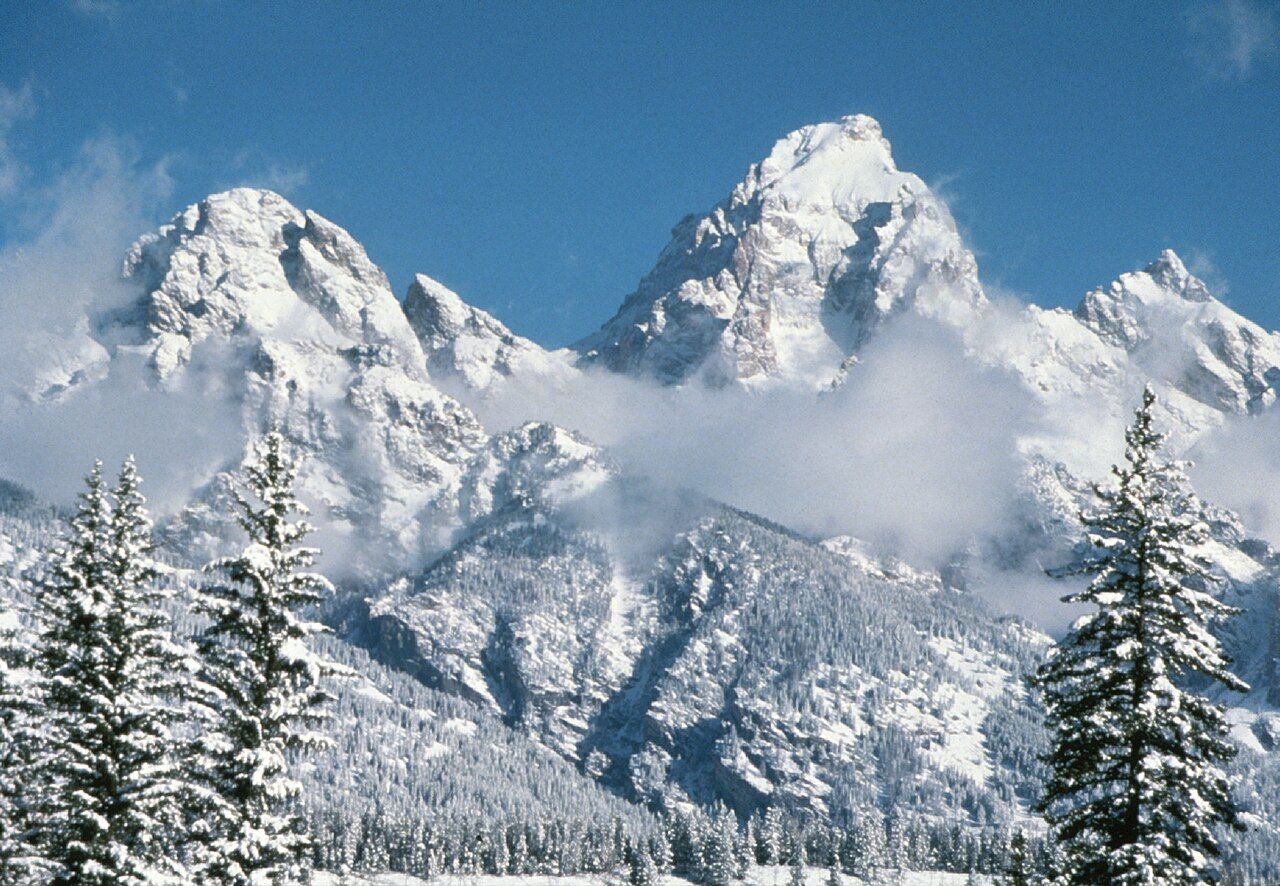

Jackson Hole is a valley about fifty miles long, walled on the west by the Teton Range and on the east by lower, rounded hills. That simple geography shapes the light you work with every day. The Tetons rise abruptly from the valley floor with no foothills in front of them, and they face east, towards the rising sun. The valley itself is a bowl that holds cold air, fog and smoke. Learn how those pieces fit together and you will spend less time waiting in the wrong place.
Sunrise on an east-facing range
Because the Tetons face east, the first light of the day strikes them directly. On clear mornings, the highest peaks turn pink or orange a few minutes before the sun reaches the valley floor. That glow, often called alpenglow, slides down the mountains as the sun rises, and the warm colour fades quickly into ordinary daylight. The whole show can be over in a quarter of an hour.
That is why so many of the classic viewpoints are sunrise locations. At Mormon Row, Schwabacher Landing and Oxbow Bend, the mountains catch the light while the foreground is still in shade, and calm water doubles the effect. Arrive in the dark, set up with a headlamp, and be ready well before the sun appears.
Evenings work differently. The sun sets behind the range, so the peaks fall into silhouette and the sky above them glows. Clouds over the summits can light up long after sunset. Evenings suit backlit wildlife on the flats, silhouettes, and long shadows thrown east across the valley floor.
Winter: inversions and hard cold
From December to March the valley is deep in snow, and most roads in Yellowstone close to ordinary cars. In Grand Teton, the main highway through the valley stays open, while the inner park road closes to vehicles in winter and becomes a route for skiing and snowshoeing.
frame info
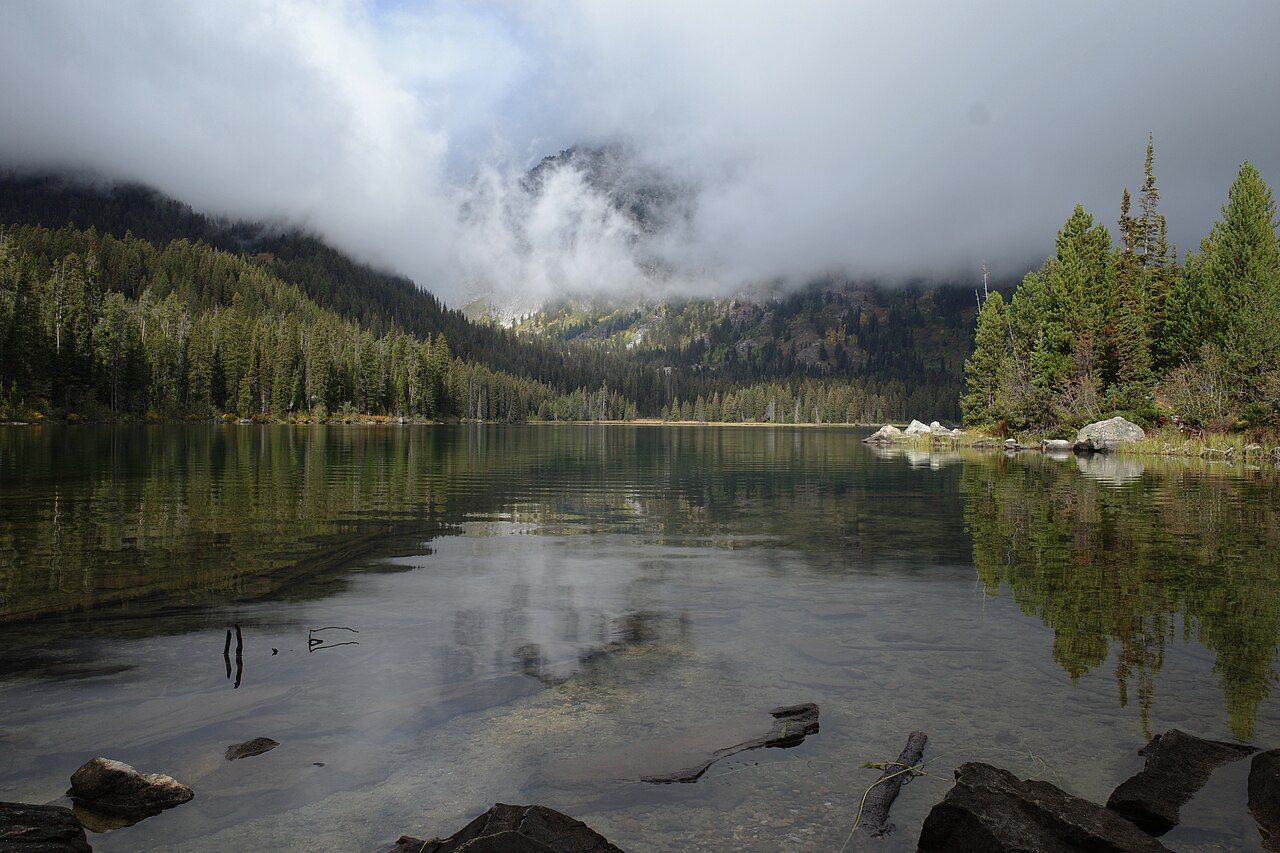
Sajith T S · CC BY-SA 4.0On calm, clear nights cold air drains off the mountains and pools in the valley. This creates temperature inversions, where the valley floor is much colder than the slopes above it. Fog often forms along the Snake River and spreads over the flats, then burns off as the morning warms. Frost coats every branch and blade of grass in a thick layer of hoar. Some of the most delicate winter images come from these mornings, with the peaks rising clear above a sea of fog or the river steaming in the cold.
Winter light is low even at midday, which keeps shadows long and textures strong in the snow. Temperatures can fall well below zero, so keep spare batteries warm, protect your fingers and let the camera warm slowly before you open bags indoors.
Spring: green-up and moving water
Spring comes late. Snow often lingers on the valley floor into April, and the high peaks stay white well into summer. By late May and June the sagebrush flats turn green, wildflowers such as arrowleaf balsamroot and lupine bloom across the slopes, and rivers run high with snowmelt.
Next framePhotographs that leave no markThis is a season of contrasts: snowy peaks above green meadows, newborn bison calves and elk calves, bears out of their dens. Weather is changeable, with sun, rain and snow sometimes in the same day. Clouds building over the range in the afternoon can make strong skies.
Summer: early starts and smoke
Summer days are long. The sun rises very early and sets late, which means early mornings and late evenings are separated by many hours of hard, high light. Many photographers shift their working hours, shooting at dawn and dusk and using the middle of the day to scout, rest or travel.
Afternoon thunderstorms are common over the mountains and can bring lightning, wind and sudden rain. Watch the sky if you are out on open ground and seek shelter in a vehicle when storms move in.
In many recent summers, smoke from wildfires, sometimes hundreds of miles away, has drifted into the valley from mid-summer onwards. Light smoke softens the light and turns the sun red at the ends of the day, which can be beautiful. Heavy smoke hides the mountains completely and is unhealthy to breathe. Air quality reports can help you decide whether to head out. Smoke and its timing vary hugely from one year to the next.
Autumn: aspens, frost and the rut
From mid-September into early October, aspens and cottonwoods along the river and in the side canyons turn yellow, gold and occasionally orange. The timing changes from year to year with weather and elevation, and a single windstorm can strip the trees in a day. The first snow often dusts the peaks, and cold mornings bring frost and mist.
Autumn is also the season of the elk and moose ruts, with bulls bugling at dawn and dusk. It is one of the busiest seasons for photographers, and popular viewpoints can be crowded before sunrise. Arrive early, be considerate with tripods, and share the space. Read more about the animals in our guide to elk and the refuge.
Working with any light
Not every day delivers alpenglow or fog. Overcast skies flatten the mountains but are good for wildlife, forest interiors and close details. Midday light suits high-key snow scenes, water and abstract patterns. Storms can produce some of the most dramatic images of the year if you are willing to wait in the rain.
A few habits help you make the most of every condition:
- Check sunrise and sunset times, and look at the forecast for cloud, wind and smoke the night before.
- Scout locations in daylight so you can find them in the dark.
- Keep a short list of backup locations for each kind of light.
- Be flexible. If the mountains are hidden, look for animals, frost or water instead.
Light in Jackson Hole changes fast and rarely repeats exactly. The best plan is to be out early and often, watch the weather closely, and stay ready for the moment it all comes together.