
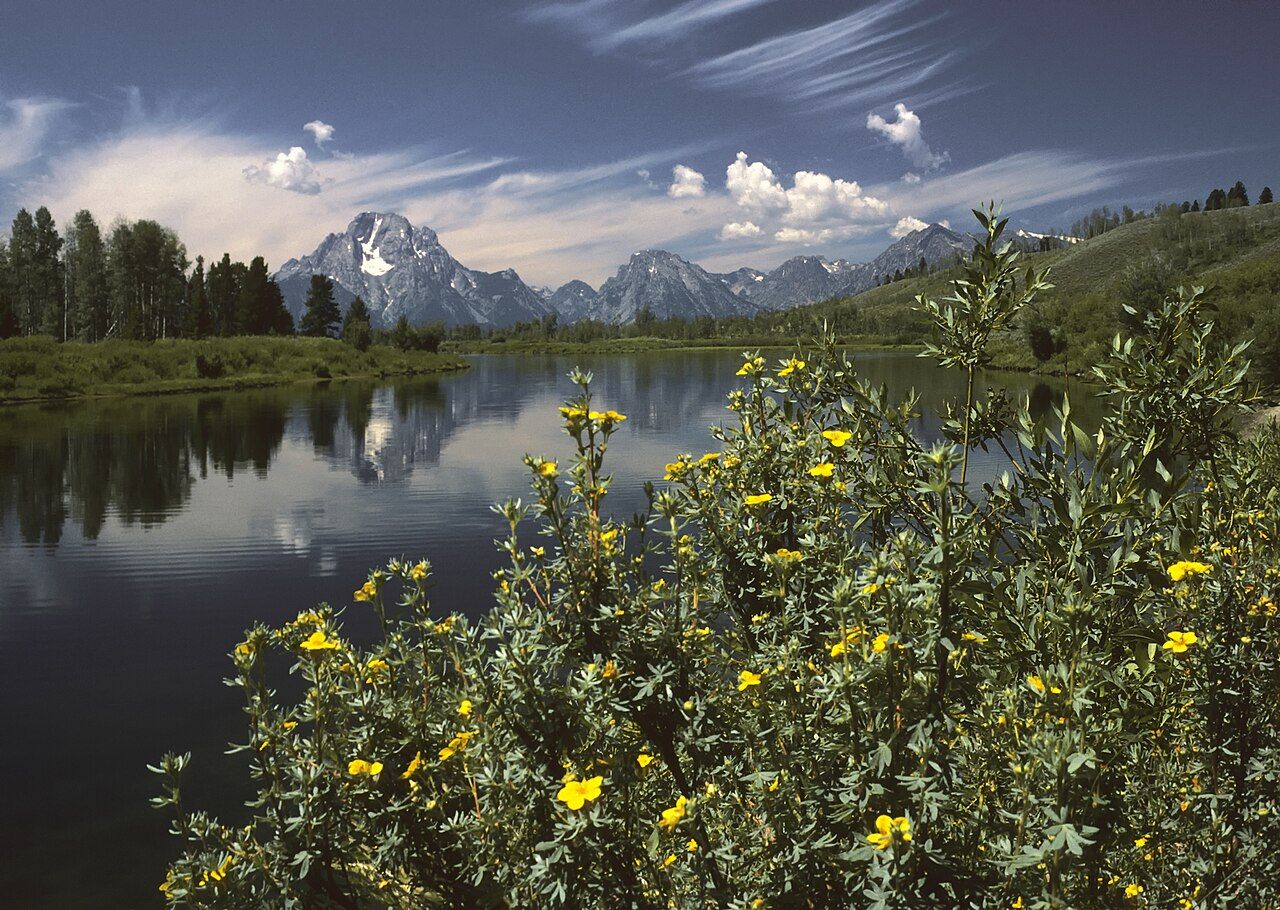
A short distance east of Jackson Lake Junction, the Snake River leaves the dam at the outlet of Jackson Lake and swings through a wide, lazy loop before heading south. This is Oxbow Bend. The current slows almost to a standstill, side channels and marshes spread through the willows, and directly across the water stands Mount Moran, the broad, flat-topped peak that dominates the northern end of the Teton Range. On a still morning the whole mountain hangs upside down in the river.
The bend lies right beside the main highway, with pullouts on the road above the water. That makes it one of the easiest major viewpoints in Grand Teton National Park to reach, and one of the busiest.
Reading the scene
Mount Moran rises well over 12,000 feet, and the long white streak on its face is the Skillet Glacier, named for its frying-pan shape. The dark vertical band near the summit is a dike of dark rock that pushed into the older stone as molten magma long ago. To the left of Moran, smaller peaks lead south toward the Grand Teton, which is partly hidden from this angle.
In the foreground, the river bends from left to right, and the near bank is lined with willows, shrubby cinquefoil and, on the slopes behind the pullouts, groves of aspen. In summer, the yellow cinquefoil flowers make an easy foreground, as in the picture at the top of this page.
When to come
Morning is the time. The mountain faces roughly east, so the rising sun lights it directly, and the air is usually calmest in the first couple of hours after dawn. Wind picks up as the day warms and breaks the reflection. By late afternoon, the sun has moved behind the range and Moran sits in its own shadow.
- Late spring and early summer: snow on Moran, fresh green willows, high water and plenty of birds.
- Midsummer: flowers along the bank, very early sunrises and, in some years, smoke haze from distant fires.
- Late September and early October: the aspens and cottonwoods turn gold and orange, often for only a week or two. Frosty mornings bring mist off the river. This is the season most photographers aim for.
- Winter: the highway past the bend is generally kept open, but much of the river freezes and snow can bury the pullouts. Check road conditions before you go.
frame info
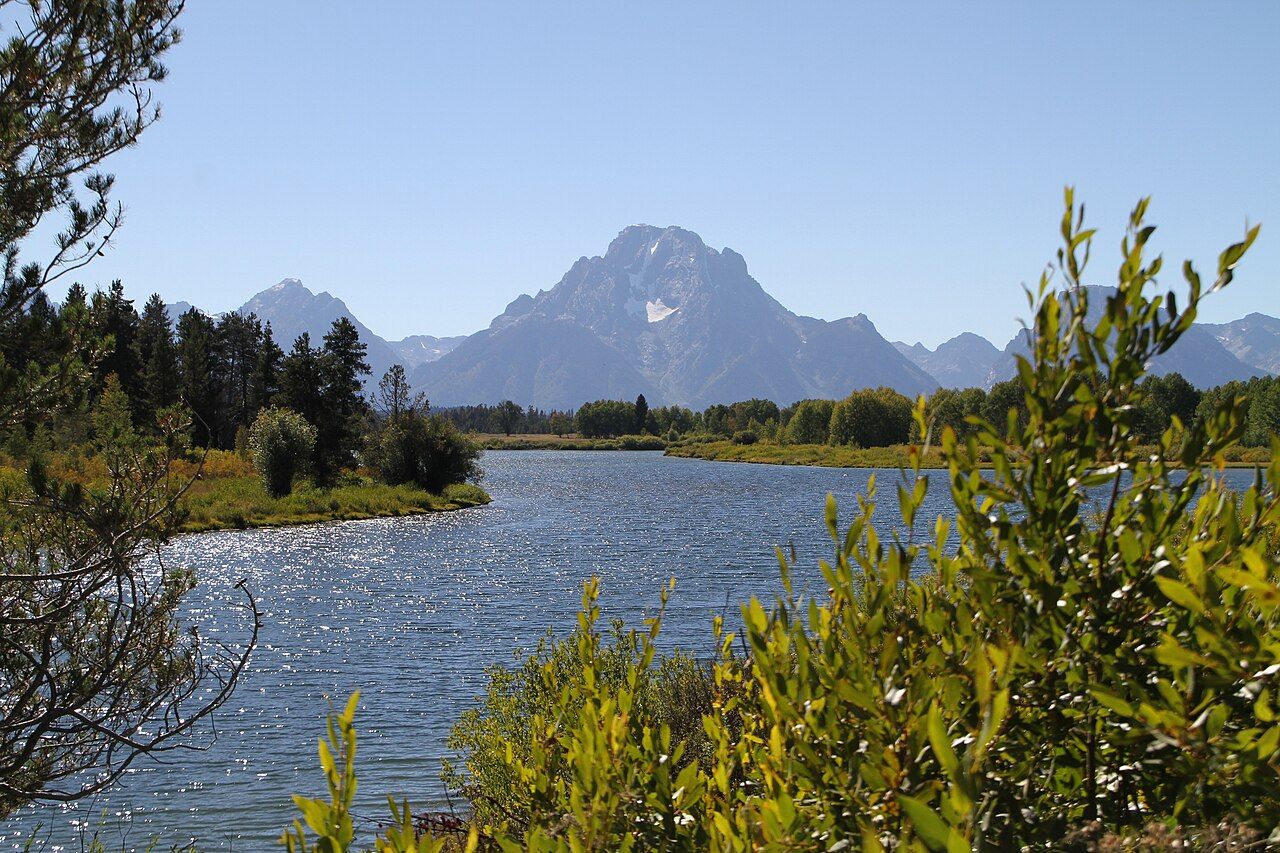
HaSt · CC BY-SA 4.0On autumn mornings after a cold night, fog often lies on the water at sunrise, then lifts in ragged layers as the sun warms it. Those few minutes, with Moran glowing above and mist drifting through the aspens, are what keeps people coming back year after year. The timing of the colour change varies, so our guide to light and seasons may help you plan.
Next frameThe Snake River OverlookWildlife on the bend
The slow water and thick willows make Oxbow Bend one of the richest wildlife areas along the road. Keep binoculars handy and scan the edges of the channels.
- Moose browse in the willows, especially at dawn and dusk. Our page on moose explains how to read their mood.
- River otters fish the channels and sometimes haul out on logs. They move fast, so a longer lens and a quick shutter help.
- Beavers and muskrats work the edges early and late in the day.
- American white pelicans visit through the warmer months, along with ducks, geese, trumpeter swans, ospreys and bald eagles.
- Elk cross the meadows, and bears sometimes roam the hills above the bend. A bear near the road draws a crowd fast.
Park rules require you to stay at least 100 yards from bears and wolves and at least 25 yards from other animals, including moose and elk. Never approach for a closer frame, never feed animals, and never use calls or bait. If an animal is near the road, stay in your vehicle or at a pullout and let rangers manage the scene. The page on wildlife photography ethics goes further into this.
Photographing the bend
The pullouts give several angles, and each frames the scene differently. Walk along them before you set up.
- A wide lens takes in the whole loop and reflection, with willows or flowers in the foreground.
- A moderate telephoto isolates Moran and its reflection, cutting out the road and other photographers.
- A long lens is useful for wildlife on the far banks, but even then, keep your distance.
- A polarizer can deepen the sky and cut glare off the water, but watch that it does not erase the reflection you came for.
frame info
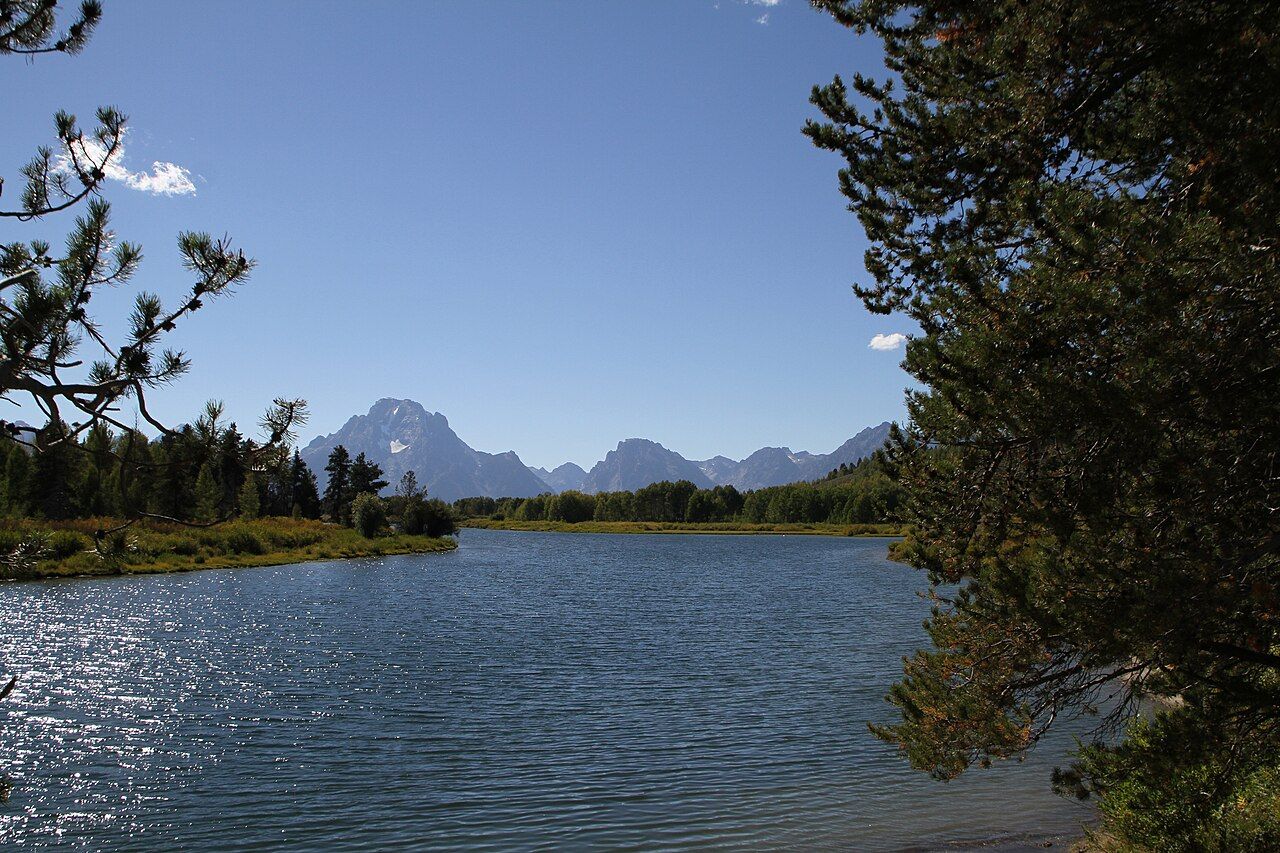
HaSt · CC BY-SA 4.0Overhanging branches near the water make natural frames, as in the picture above. If wind breaks up the reflection, use a faster shutter to freeze the ripples, or try a long exposure to smooth them into a soft sheen. Both approaches can work.
Parking and manners
The pullouts fill early on autumn mornings, and the road is busy. Park only in marked spaces, never on the shoulder or on vegetation, and watch for traffic when you step out. Keep tripods off the pavement and out of the traffic lane. The bend draws photographers in large numbers during peak colour, so set up quietly and leave room for others.
Oxbow Bend pairs naturally with a sunrise at Schwabacher Landing or a drive up the Signal Mountain road.