
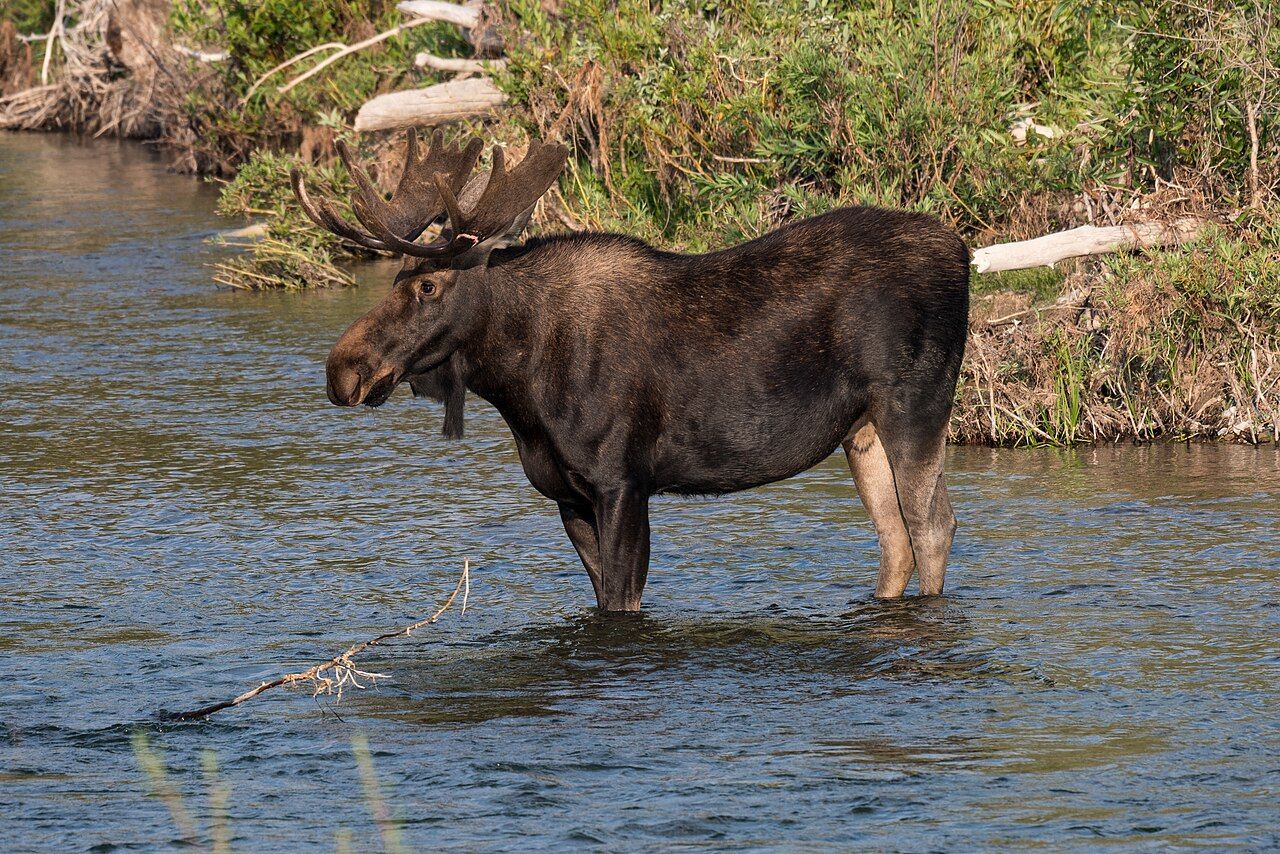

Moose are the tallest animals in Jackson Hole and, oddly, some of the hardest to find. They do not travel in big herds like elk or bison. Instead they browse alone or in small groups, standing chest deep in willows, wading in ponds and slipping along river channels. When you do see one, it is often startlingly close to a road or trail. That combination of size, surprise and short temper makes moose worth understanding before you set out to photograph them.
A browser of the bottomlands
The moose of the Rocky Mountains are the Shiras subspecies, a little smaller than their northern cousins but still enormous. A grown bull can stand around six feet at the shoulder. Moose feed mainly on woody plants, especially willow, and on aquatic vegetation in summer. They need water, cover and browse close together, which is why they follow river bottoms, beaver ponds and wet meadows.
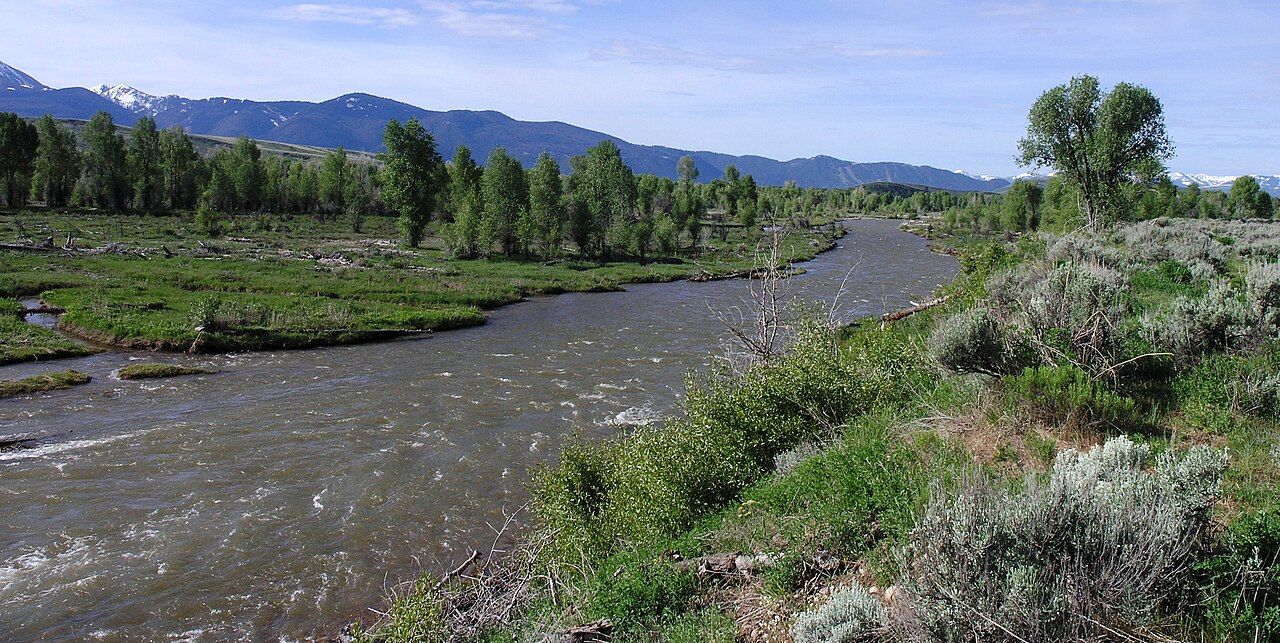
In Jackson Hole that means the willow flats along the Snake River and its side channels, the beaver ponds below the Tetons, and the cottonwood corridors of the Gros Ventre and other rivers. Moose numbers in the valley have changed over the decades, and sightings vary from year to year, so treat any one location as a likely place rather than a sure thing.
frame info
Daniel Mayer · CC BY-SA 3.0Where to look
Several areas are well known for moose, and are worth checking slowly at dawn and dusk:
- The Gros Ventre River, east of the main valley road near the small settlement of Kelly. The river's cottonwoods and willows are a classic place for moose, and they sometimes cross the road or feed in the shallows.
- The Moose-Wilson Road, a narrow, winding road between the Teton Village area and the Moose area that runs through forest, ponds and wetland. Moose and other wildlife are common along it.
- Willow flats and ponds along the Snake River, including the area around Oxbow Bend and the beaver ponds near Schwabacher Landing.
Moose blend into dark willows surprisingly well. Look for the pale legs, the long face and the dark hump over the shoulder, and scan slowly with binoculars rather than hoping one walks into the road.
The Moose-Wilson Road
This road is one of the most rewarding drives in the park for wildlife, and one of the most managed. It is narrow, partly unpaved in places, and closed to large vehicles and trailers. Parts of it close in winter, and the park has sometimes limited traffic or closed sections when bears are feeding close to the road in summer and autumn.
Next frameGrizzlies, black bears and the space between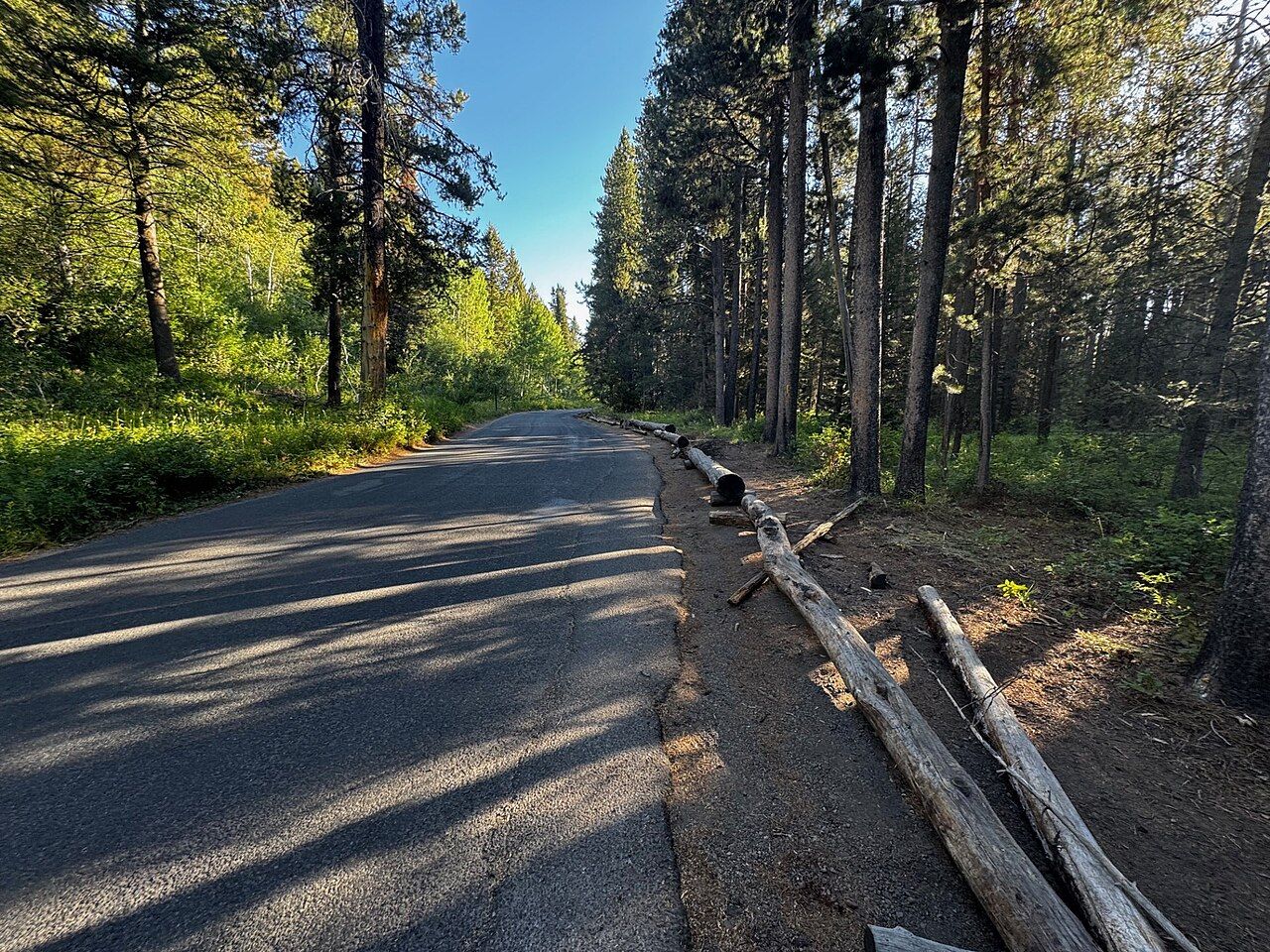
frame info
GrandTetonNPS · Public domain
Drive slowly, and only stop in designated pullouts. When a moose is close to the road, stay in your vehicle and keep moving if there is nowhere legal to stop. Traffic jams here can trap animals between cars, and that is when people get hurt.
Signs of an upset moose
Moose are not predators, but they defend themselves and their calves fiercely, and they kick with their front legs as well as their back. Cows with young calves in late spring and early summer are especially dangerous, as are bulls during the autumn rut. Watch for these signs:
- Ears laid back against the head.
- The hair along the hump and neck standing up.
- Lip licking, head lowered, or the moose staring straight at you.
- Stamping, grunting or a short run towards you.
If you see any of these, back away at once and put a tree, a vehicle or a large obstacle between you and the animal. Park rules ask you to keep at least 25 yards from moose; with a cow and calf, or a rutting bull, give far more. A long lens is the only sensible way to fill the frame. Moose also share their habitat with bears, so carry bear spray on any walk through willow country and know how to use it.
Autumn bulls
From around September into October, bulls lose their velvet and start looking for cows. This is the season most photographers come for: bulls with broad, palmate antlers in golden willows and frosted meadows. Bulls in the rut are restless, wander widely and may ignore people until suddenly they do not. Keep well back, never get between a bull and a cow, and avoid sudden movements.
The best light coincides with the most moose activity. Early mornings bring frost on the willows, mist off the water and soft side light, and the last hour of the day can turn the whole valley amber. A low, quiet position at a legal pullout, with the long lens on a beanbag or tripod, usually works better than walking towards an animal.
Moose in winter
Moose handle deep snow well, using their long legs to wade through drifts. In winter they browse on willow twigs and other woody plants, and some move into the lower valley and even into neighbourhoods near Jackson. Bulls shed their antlers in early winter, so by mid-winter many look like large cows.
Winter is a hard time, and moose need every bit of energy they have. Disturbance, even someone walking towards them for a photograph, makes them burn reserves they cannot spare. Watch from a distance, stay on plowed roads and paths, and let them feed.
For the wider picture of how the seasons shift the valley's wildlife, read our notes on light and seasons, and see wildlife photography ethics for the habits that keep animals and people safe.