
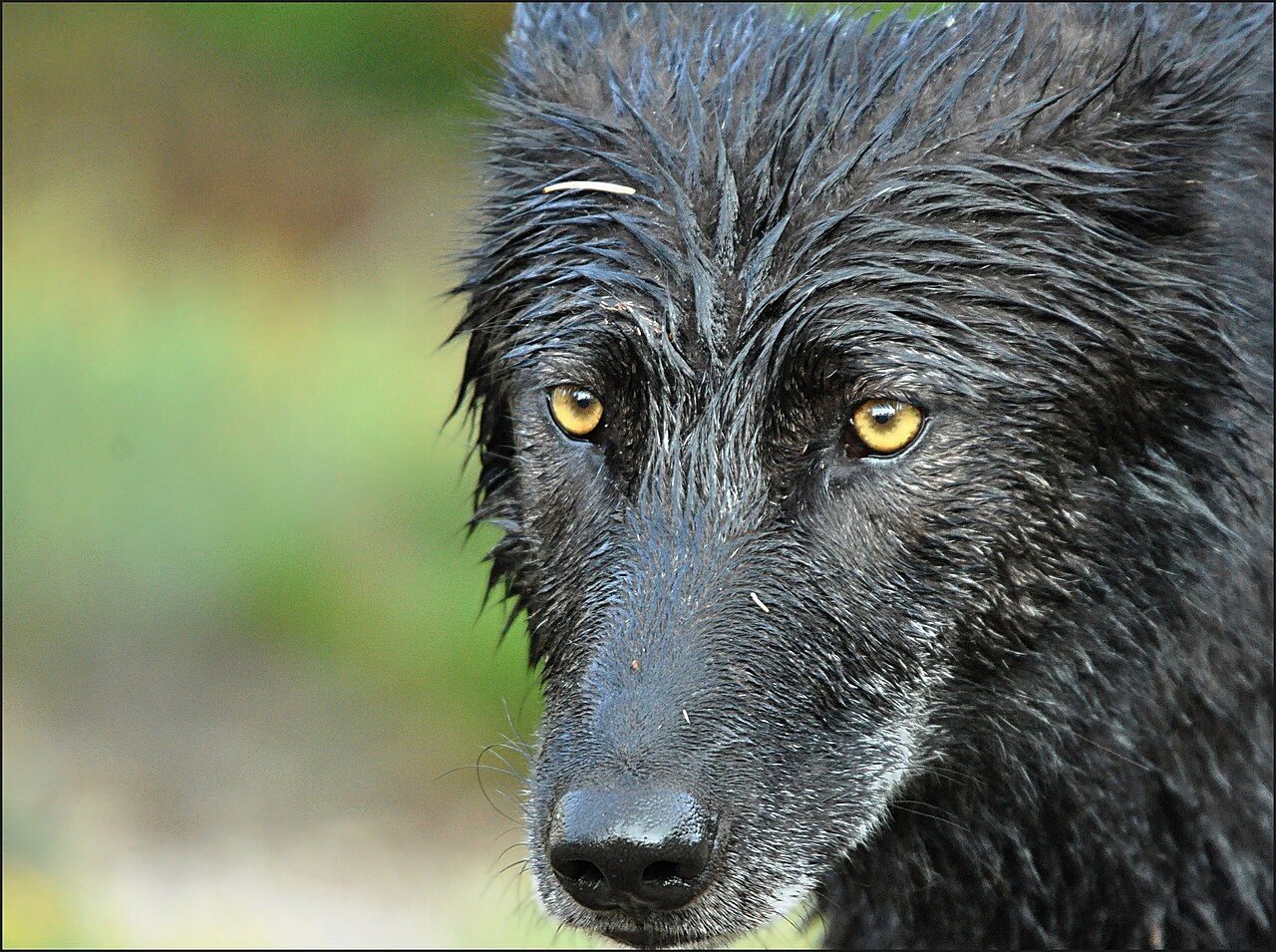
For much of the 20th century there were no wolf packs in Yellowstone. Government predator control programmes had removed them from the park and most of the surrounding region by the early decades of the century. When wolves were returned in the mid-1990s, it was one of the most watched wildlife experiments in the world, and it changed how many people visit the park. Today, scanning a snowy hillside at dawn for a moving dark shape is one of the great pleasures of a winter trip.
The reintroduction
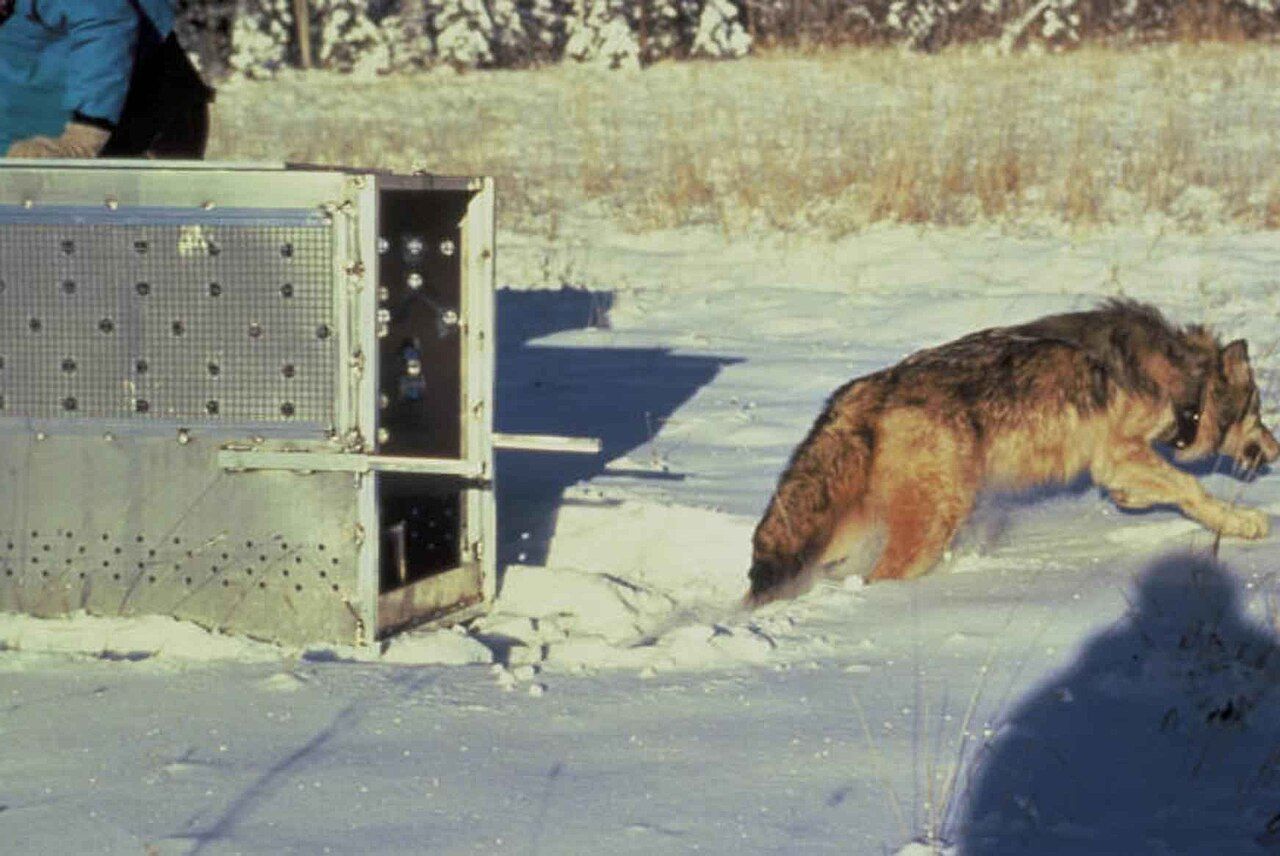
In the winters of 1995 and 1996, biologists captured gray wolves in western Canada and brought them to Yellowstone. They were held for a time in large acclimation pens in the park, partly to break their homing instinct, and then released. At the same time a separate group was released in central Idaho. Altogether a few dozen wolves arrived in Yellowstone in those two winters.
frame info
U.S. Fish and Wildlife Service · Public domain
They did well. The first packs formed quickly, raised pups and spread across the park and beyond. Wolves soon moved into Grand Teton and the wider Jackson Hole area as well. Yellowstone's wolf population has risen and fallen since, depending on prey, disease and competition between packs; in recent years it has generally been in the region of one hundred animals inside the park, though the figure changes every year.
The return of wolves has been credited with a range of changes in the park's ecology, from how elk use the valleys to the growth of streamside willows. Scientists still debate how strong some of those effects are, and the story is more complex than a simple chain reaction. What is clear is that wolves are once again part of the system, killing elk and bison, competing with bears and coyotes for carcasses, and feeding ravens and eagles.
Wolves in the Lamar Valley
The open country of the northern range, and especially the Lamar Valley, is the best-known place to watch wolves. The valley is broad and largely treeless, so animals can be seen at long distances, and the road from the North Entrance through Mammoth and Lamar to the north-east corner is usually kept open to cars all year. That makes it the main stage for winter wolf watching.
Packs come and go. Territories shift as packs grow, split or decline, and a valley that held a well-known pack one year may be quiet the next. The watchers you find along the road at dawn often have a good sense of what has been seen recently, and most are happy to share a look through a scope if you are patient and polite. Rangers sometimes run programmes in the area too.
Next frameGrizzlies, black bears and the space betweenScopes, not lenses
Most wolf sightings in Yellowstone are distant. Animals cross a far hillside, bed down on a ridge or work a carcass across the river. Even a long telephoto lens will often render them as small dark shapes. A good spotting scope on a sturdy tripod, plus binoculars, will show you far more behaviour than a camera.
- Arrive before first light. Wolves are often most active at dawn and dusk.
- Use legal pullouts, park completely off the road and keep doors and voices quiet.
- Stand back from the road edge and do not walk out towards animals for a closer look.
- Keep at least 100 yards from wolves, the same rule as for bears, and more when animals are on a carcass or near a den.
- Never howl, call or use sounds to draw wolves closer or make them react.
Occasionally a wolf crosses the road close to cars. If that happens, stay in your vehicle, let it pass and resist the urge to follow. A wolf that becomes used to cars and people is at risk; habituated wolves have been removed in the past.
Winter tracking light
Winter is the classic season for wolf watching. Snow makes dark animals stand out against white slopes, tracks show where packs have travelled overnight, and elk and bison gathered on the lower ground draw predators into the open. Cold, clear mornings bring a hard blue light that turns pink on the hills as the sun rises.
For photographs, think wide as well as long. A small wolf in a vast snowy valley, with tracks leading across the frame, often says more than a cropped portrait. Expose carefully, adding exposure to keep snow bright, and watch for steam from breath and frost on fur. Keep spare batteries inside your coat, and let the camera adjust to the cold slowly when you move between car and outside.
Conditions are severe. Temperatures well below zero are normal, wind across the valley can be bitter, and roads can ice or drift shut. Check road and weather reports with the parks before you go, and carry warm clothing, food and water even on short drives.
Collars and research
Researchers fit radio or GPS collars to some wolves to follow packs and study their lives. If you see a collared wolf, it is part of a long-running study that has taught scientists a great deal about wolf behaviour, territory and survival. Collars can make a photograph feel less wild, but they are part of the modern story of wolves in the park.
Wolves are also protected differently inside and outside park boundaries. Once they leave the parks, state rules apply, and hunting is legal in some surrounding areas. That is one reason why sharing exact den sites or regular locations on social media is discouraged. For more on how to share sightings responsibly, read wildlife photography ethics.
Wolves and the rest of the valley
Watching wolves also means watching everything around them. Ravens and magpies circle a carcass before you see the wolves themselves. Elk or bison bunch and stare in one direction. Coyotes slink in to steal scraps, and grizzly bears in spring sometimes push wolves off a kill. Read the behaviour of other animals and you will find wolves more often.
Wolves remain wild, shy and unpredictable. Most visitors never see one, and many who do see only a distant dot. Bring patience, warm clothes and a scope, and treat each sighting as a privilege rather than a promise.