
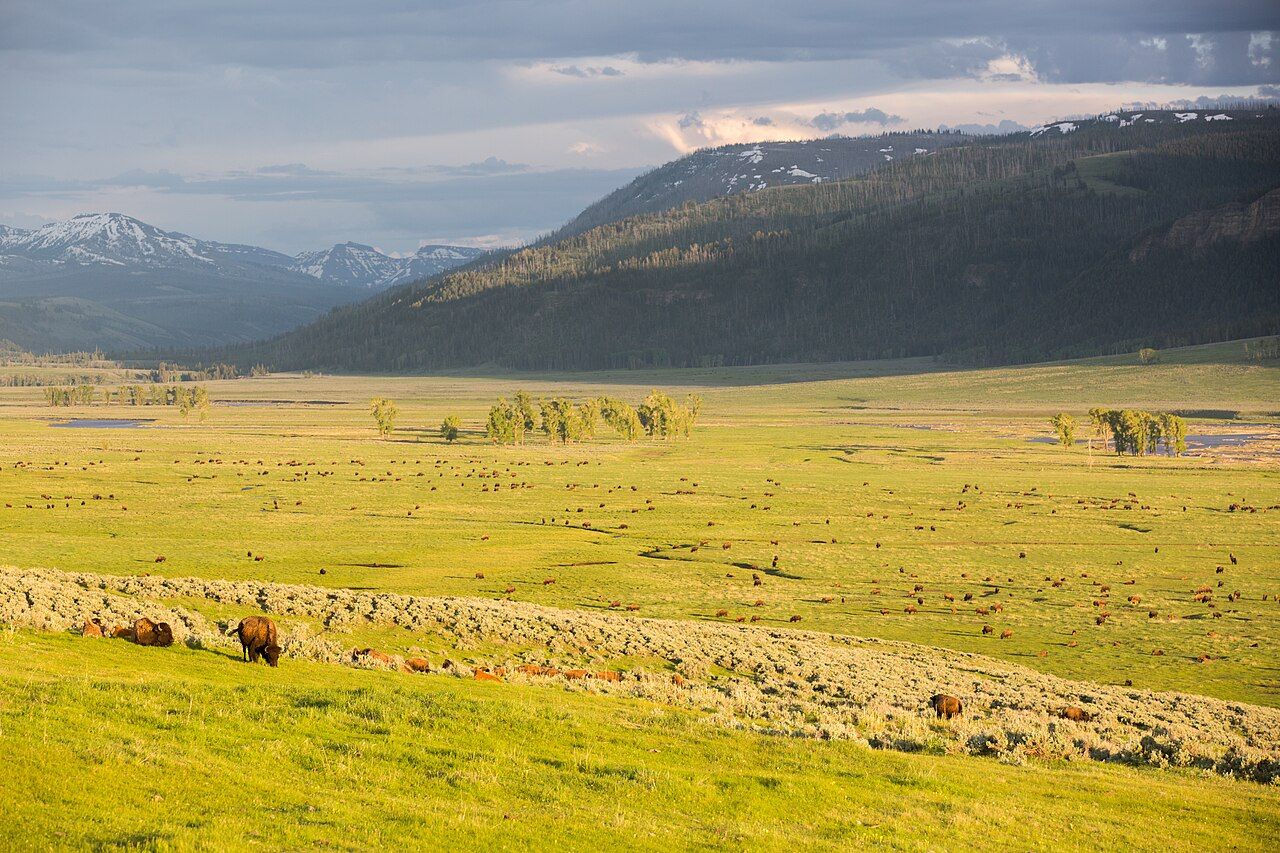

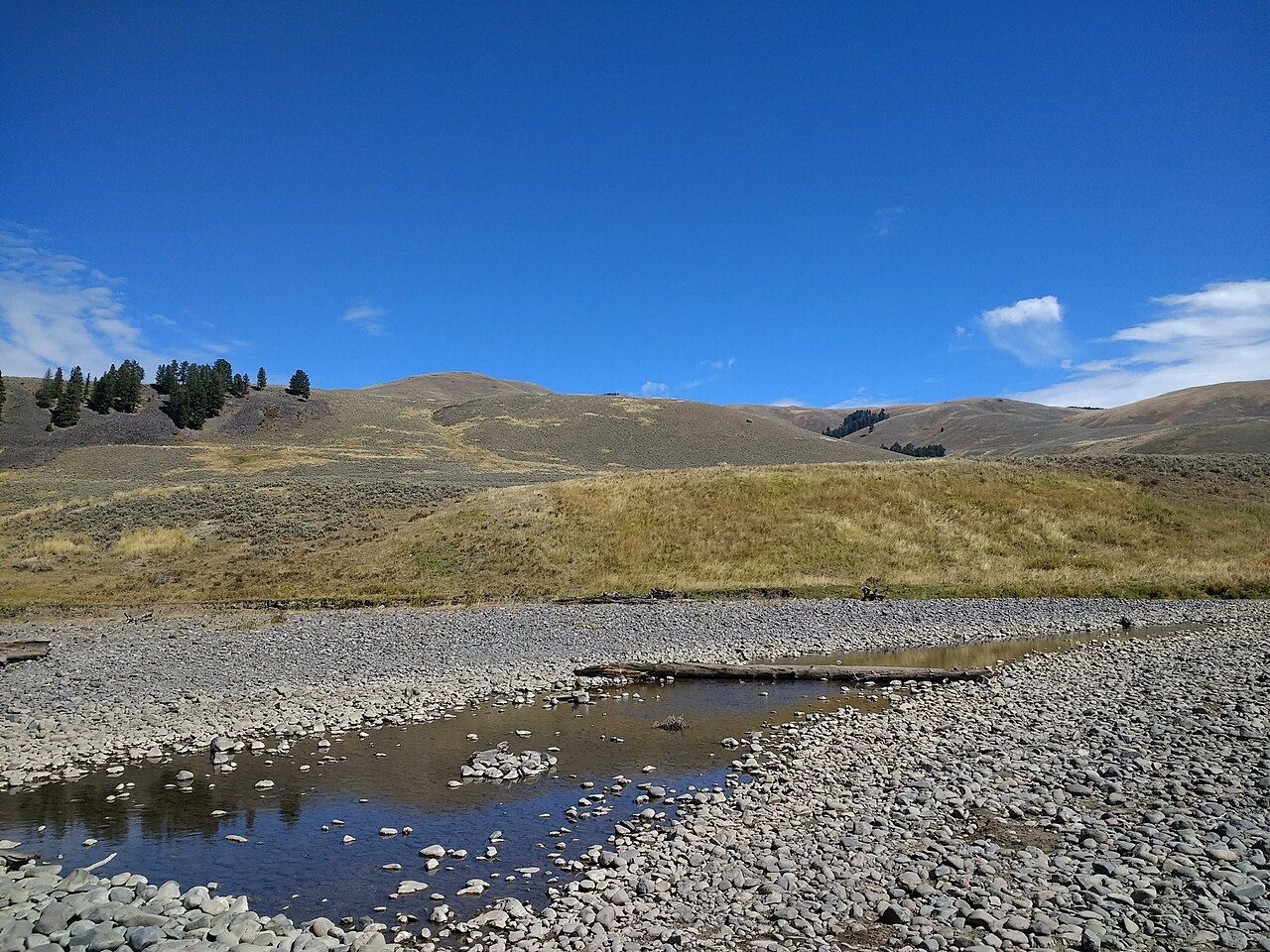
The Lamar Valley lies in the northeast corner of Yellowstone National Park, where the Lamar River winds through a broad, open basin between forested ridges and the high peaks of the Absaroka Range. There are few trees on the valley floor, mostly grass and sagebrush, with cottonwoods along the river and conifers on the slopes. That openness is what makes it special. Big animals are easy to see here, and the valley holds a lot of them: bison in herds of hundreds, elk, pronghorn, coyotes, bears and, since the 1990s, wolves.
The nickname "America's Serengeti" is an exaggeration, but an understandable one. On a June morning, with bison calves scattered across green grass and a wolf trotting along a distant ridge, it can feel like a savanna in miniature.
Getting there and the winter road
The valley lies along the road that runs from the North Entrance at Gardiner, past Mammoth Hot Springs and Tower Junction, and on toward the Northeast Entrance and Cooke City. This is the one road in the park that is normally kept open to cars all winter, which makes Lamar one of the few places in Yellowstone you can drive to in the snow season. Even so, conditions can be severe and closures do happen, so confirm it with the park's current notices first.
Beyond Cooke City, the roads over the high passes close for the winter. In summer the whole loop is open, and you can reach the valley from either end. If you are coming from Mammoth Hot Springs, allow plenty of time: the drive is slow, wildlife stops are frequent, and the valley itself rewards slow travel.
frame info
Whoisjohngalt · CC BY-SA 4.0Bison by the thousand
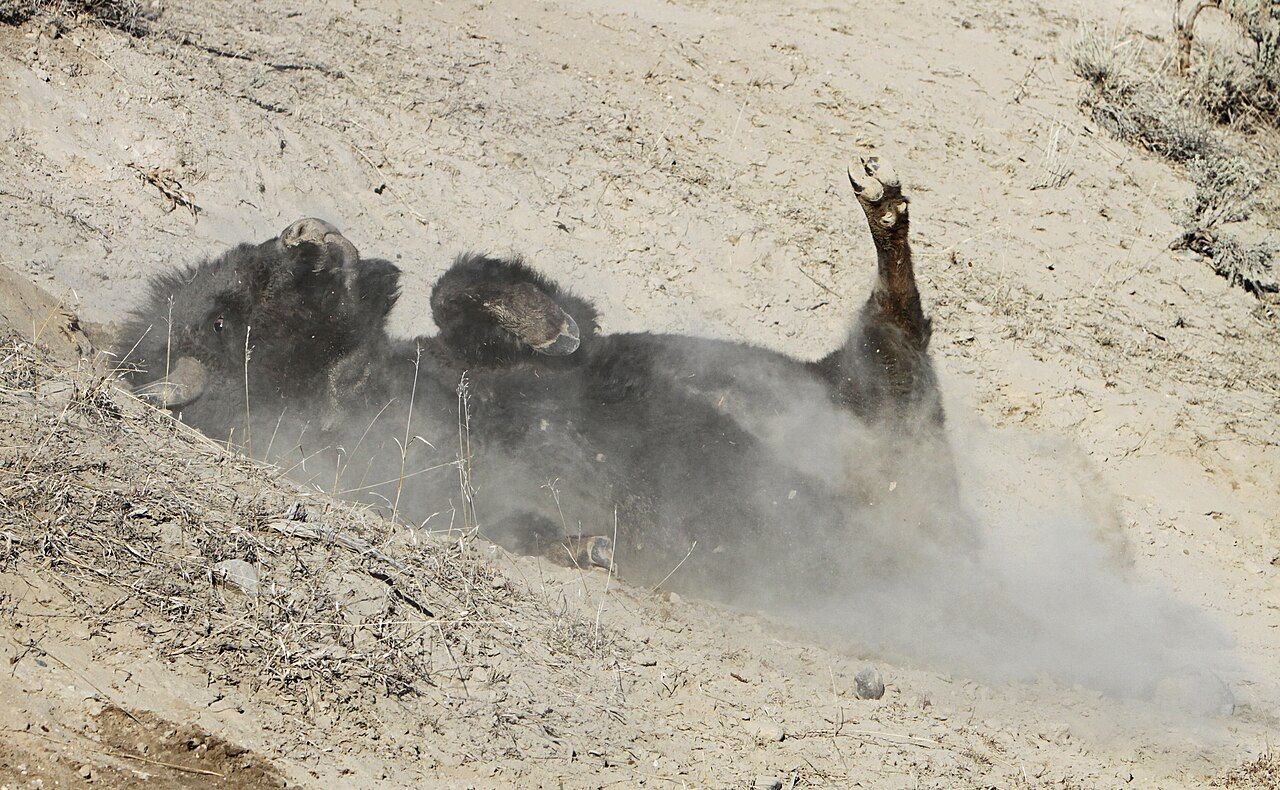
Lamar is one of the best places in the park to see bison. Through spring and summer, herds graze across the valley floor, wallow in the dust, cross the river and sometimes walk straight down the road. In late April and May, reddish-orange calves appear among the herds, and they are a favourite subject for photographers.
frame info
NPS/Jim Peaco · Public domain
Bison look slow and calm, but they can run much faster than a person and they injure more visitors than any other animal in the park. Stay at least 25 yards away, and much more if they are agitated: a raised tail, pawing or head shaking are warning signs. During the rut in late summer, bulls are especially unpredictable. Our page on bison explains these signals in more detail.
Wolves at dawn
Wolves were brought back to Yellowstone in 1995 and 1996, after decades of absence, and the Lamar Valley quickly became one of the best places in the world to watch wild wolves. Packs den and hunt in the area, and on many mornings someone in the valley has one in view.
Seeing them, though, usually means looking from far away. Wolves are most active at dawn and dusk, and they are often a mile or more off, on a distant slope or along the river. Wolf watchers gather at pullouts in the early morning with spotting scopes, scanning the hills for movement. If you see a group of people with scopes all pointed the same way, there is a good chance they have found something.
frame info
Neal Herbert · Public domain
Photographing wolves here takes patience and realistic expectations. Even with a very long lens, most sightings produce small, distant figures. The best results come from showing the wolf in its landscape rather than trying to fill the frame. Park rules require you to stay at least 100 yards from wolves, and closer encounters, when a wolf crosses the road, should be brief and quiet. Stay in or near your vehicle. Our page on wolves since 1995 covers their story and behaviour in more depth.
Next frameHayden Valley and the bison rutOther residents
Pronghorn, the fastest land animals in North America, graze the sagebrush in the lower parts of the valley, often in small groups, and they are fast enough to cross the whole basin in minutes. Elk move between the valley floor and the forest edge. Coyotes hunt rodents in the grass, and you may see a badger digging near the road. Grizzly and black bears use the valley too, especially in spring when they feed on winter-killed carcasses and new grass.
Watch the river for otters, the cliffs for bighorn sheep near the eastern end of the valley, and the sky for bald eagles and ravens, which often follow wolves to a kill. Spotting a bear or wolf often starts with other animals. A herd of elk all staring one way, ravens circling low over one patch of ground, or bison bunching together can all hint that a predator is nearby. The tributary creeks at the east end of the valley, such as Soda Butte Creek, are also worth scanning.
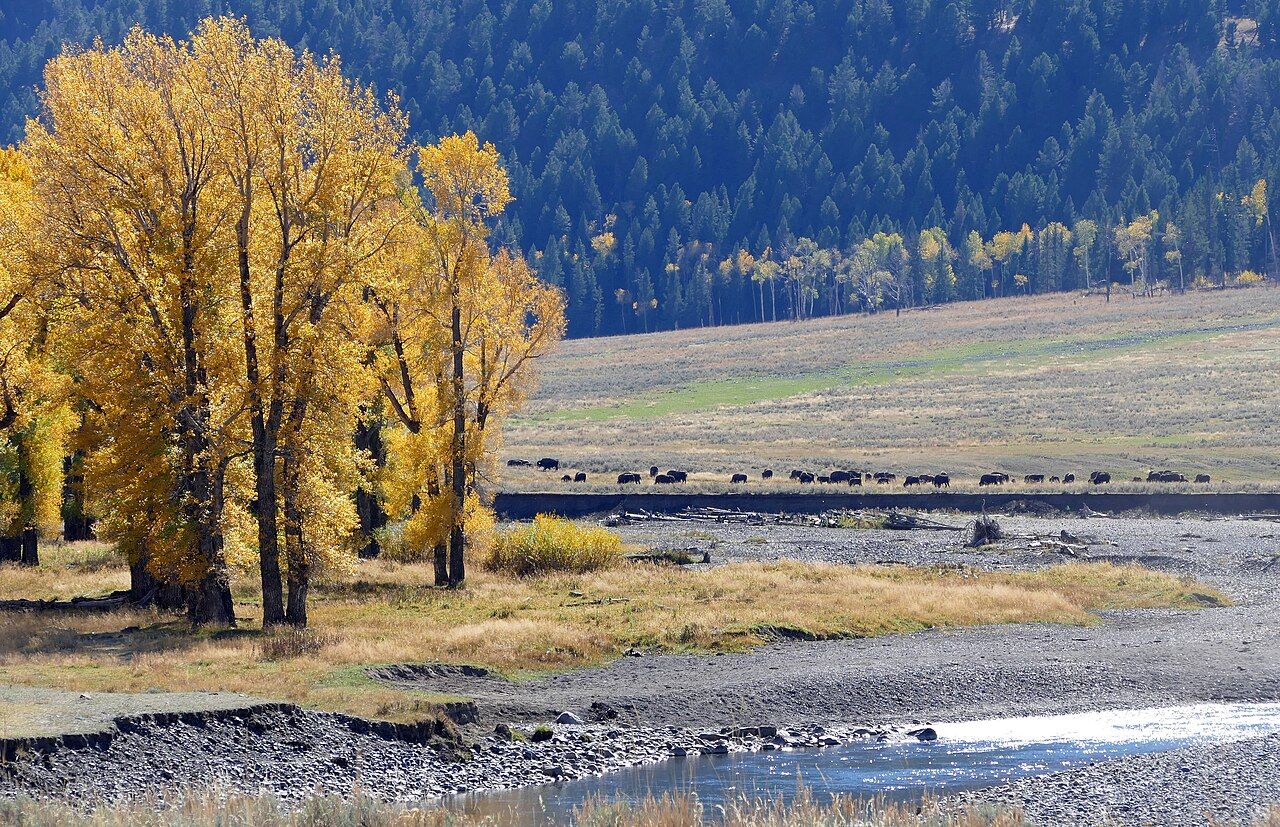
frame info
Yellowstone National Park from Yellowstone NP, USA · Public domain
Light, season and manners
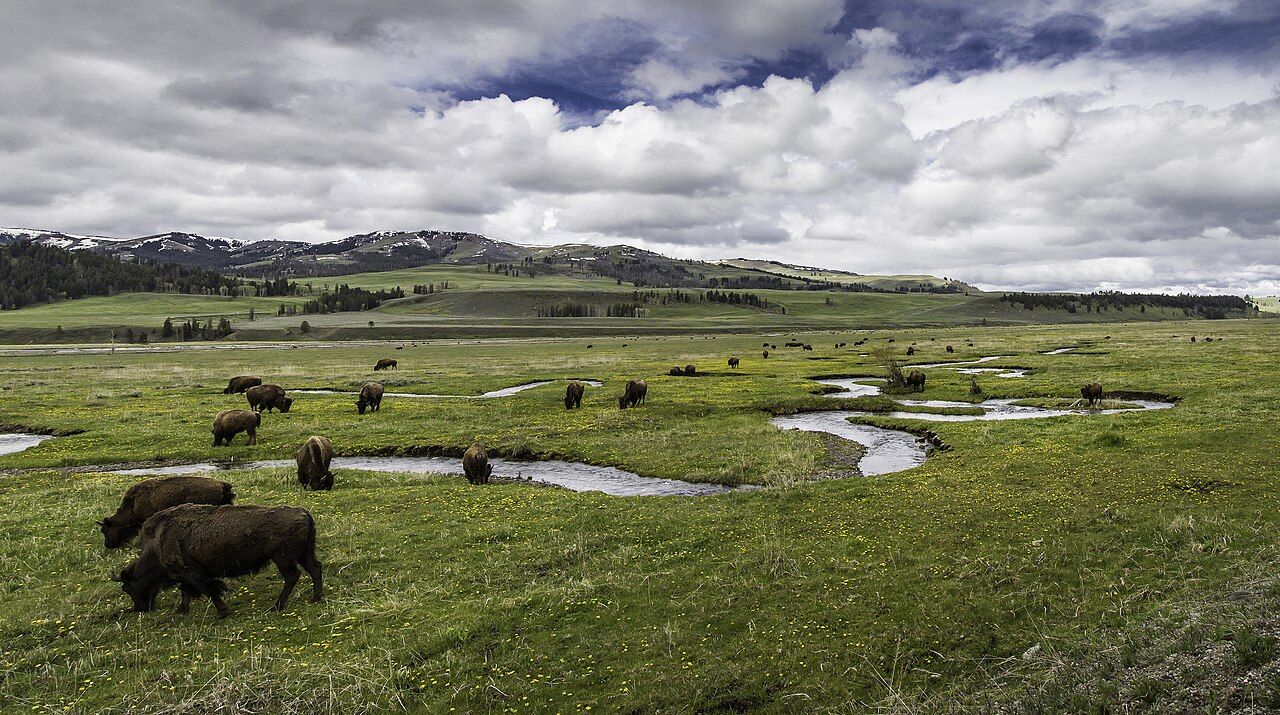
The valley runs roughly east to west, and the best light comes early and late. At dawn, the low sun rakes across the grass and lights the animals from the side; at dusk, the ridges glow and the valley floor falls into shadow. Midday light is flat and harsh, though summer storms can create drama, as in the picture below.
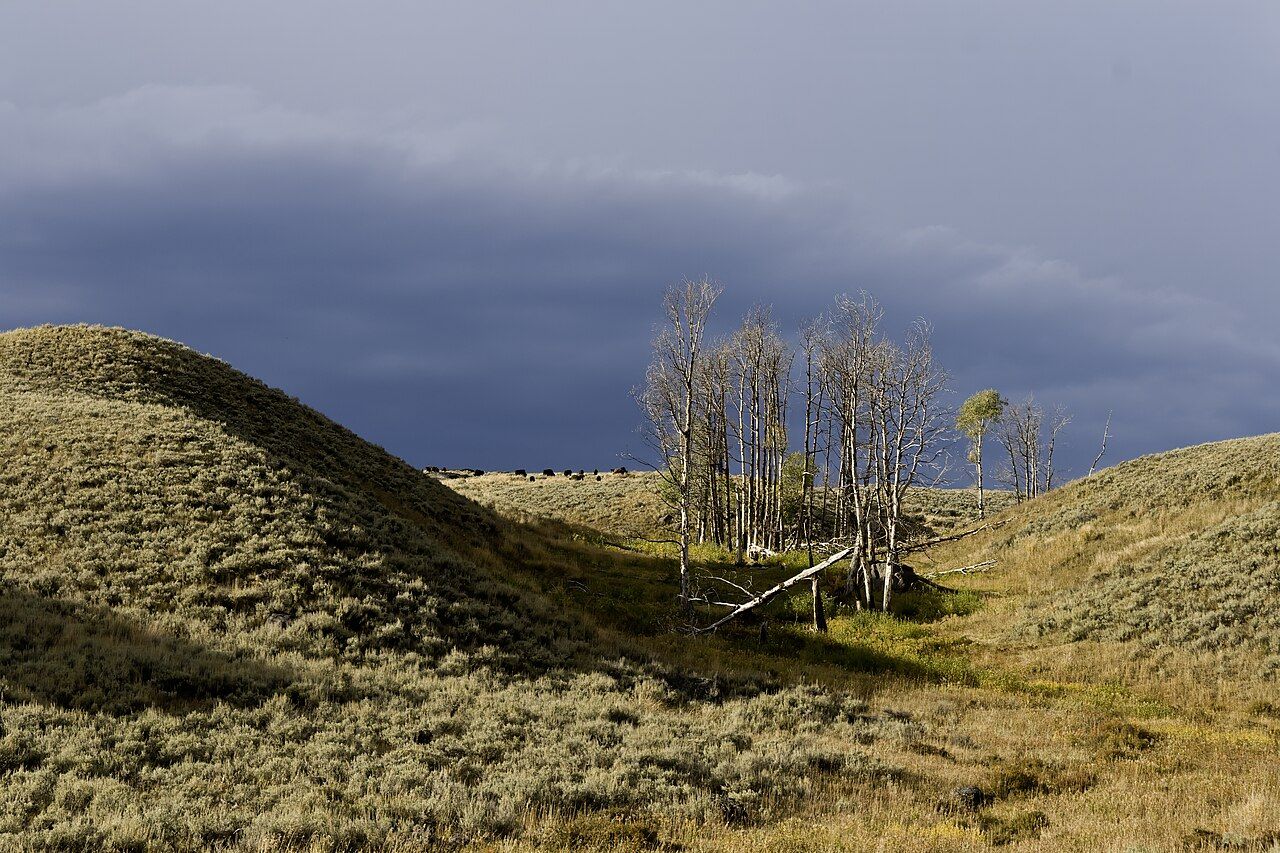
frame info
Acroterion · CC BY-SA 4.0- Spring: calves, green grass, bears emerging and wolves often visible near dens. Mud and snow linger.
- Summer: early sunrises, big herds and the start of the bison rut. Midday heat haze softens distant subjects.
- Autumn: golden cottonwoods, elk bugling, cold mornings and fewer visitors.
- Winter: deep snow, bitter cold and wolves easy to spot against white slopes. Many watchers consider it the best season.
Etiquette matters in a place where many people share the same views. The best wildlife watchers in Lamar are the quiet ones. They park fully off the road, keep their voices low, avoid slamming doors and never try to move animals by calling or baiting. If someone offers a look through their scope, it is fine to accept, but do not crowd a stranger's equipment or block their view.
- Never stop in the traffic lane. Use pullouts, and move on if they are full.
- Never approach animals for a better angle. Use a longer lens or move on.
- Never feed wildlife, and never leave food where animals can reach it.
- Drones are banned in the park.
For more on how to behave around wildlife in the park, see wildlife photography ethics.
The best wildlife watchers in Lamar are the quiet ones.