
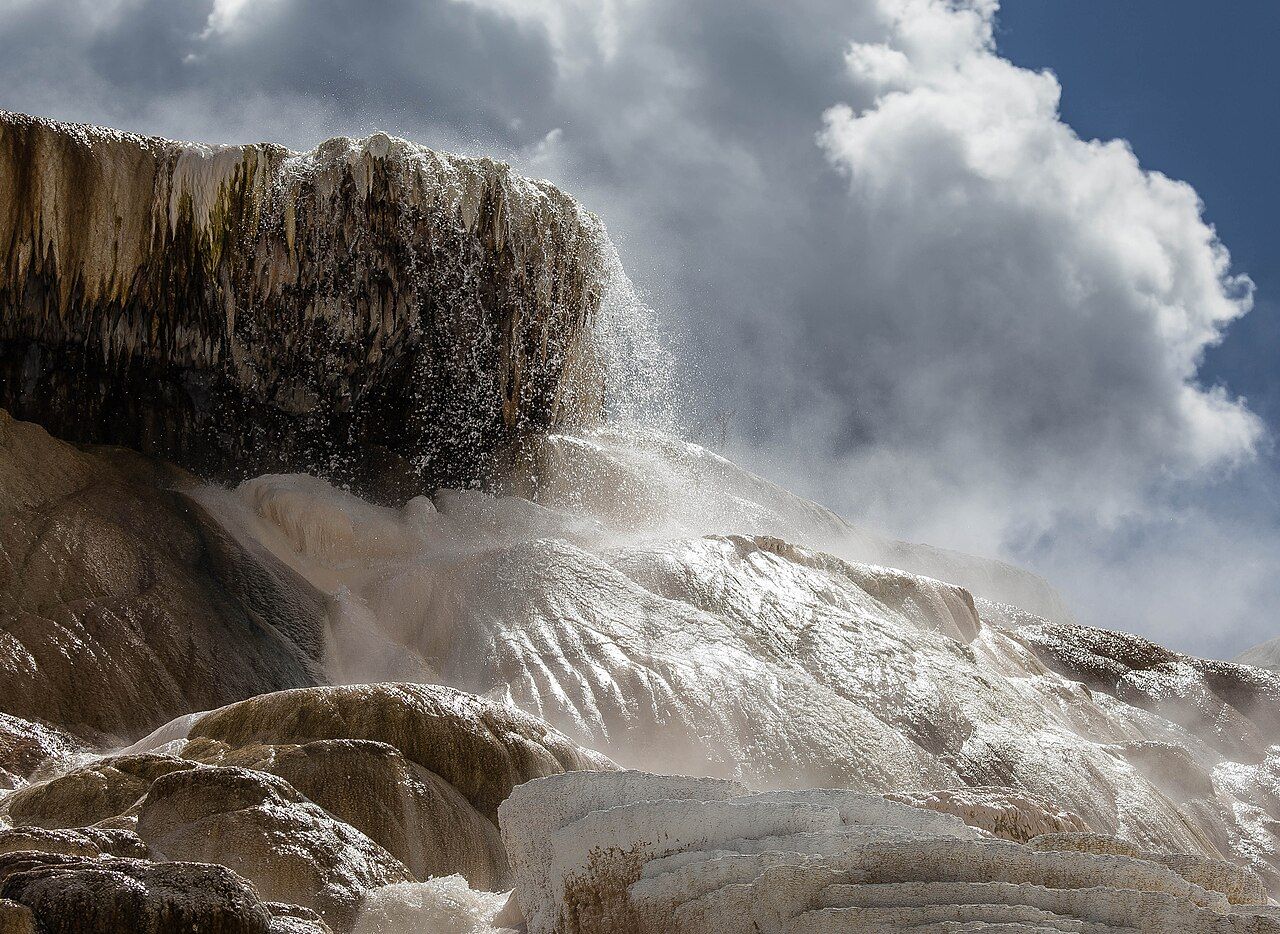
Mammoth Hot Springs feels different from the rest of Yellowstone the moment you arrive. Instead of geysers rising from flat basins, there is a hillside of white and cream stone stepping down towards a small settlement of stone and wooden buildings. Elk lie on the grass between them. Steam drifts off the terraces above. It is the park's administrative centre, a historic army post and one of its most changeable thermal areas, all in one place.
How the terraces grow
The terraces are made of travertine, a form of limestone. Hot water rising beneath Mammoth passes through old limestone deposits underground, dissolving calcium carbonate as it goes. When the water reaches the surface, it cools and releases carbon dioxide, and the dissolved mineral drops out of solution as stone. Layer by layer, the springs build ledges, rims and cascading steps.
The colours come from two sources. Fresh travertine is bright white. Where water still flows, mats of heat-loving microbes grow in bands of orange, brown, green and yellow, each suited to a slightly different temperature. Where a spring has gone quiet, the rock dries, greys and crumbles. Because the underground plumbing shifts constantly, a terrace that was flowing and colourful a few years ago may be dry now, while a new one is building somewhere nearby. Do not expect the scene in older photographs to match what you find.
frame info
The Dye Clan · CC BY-SA 3.0Walking the boardwalks
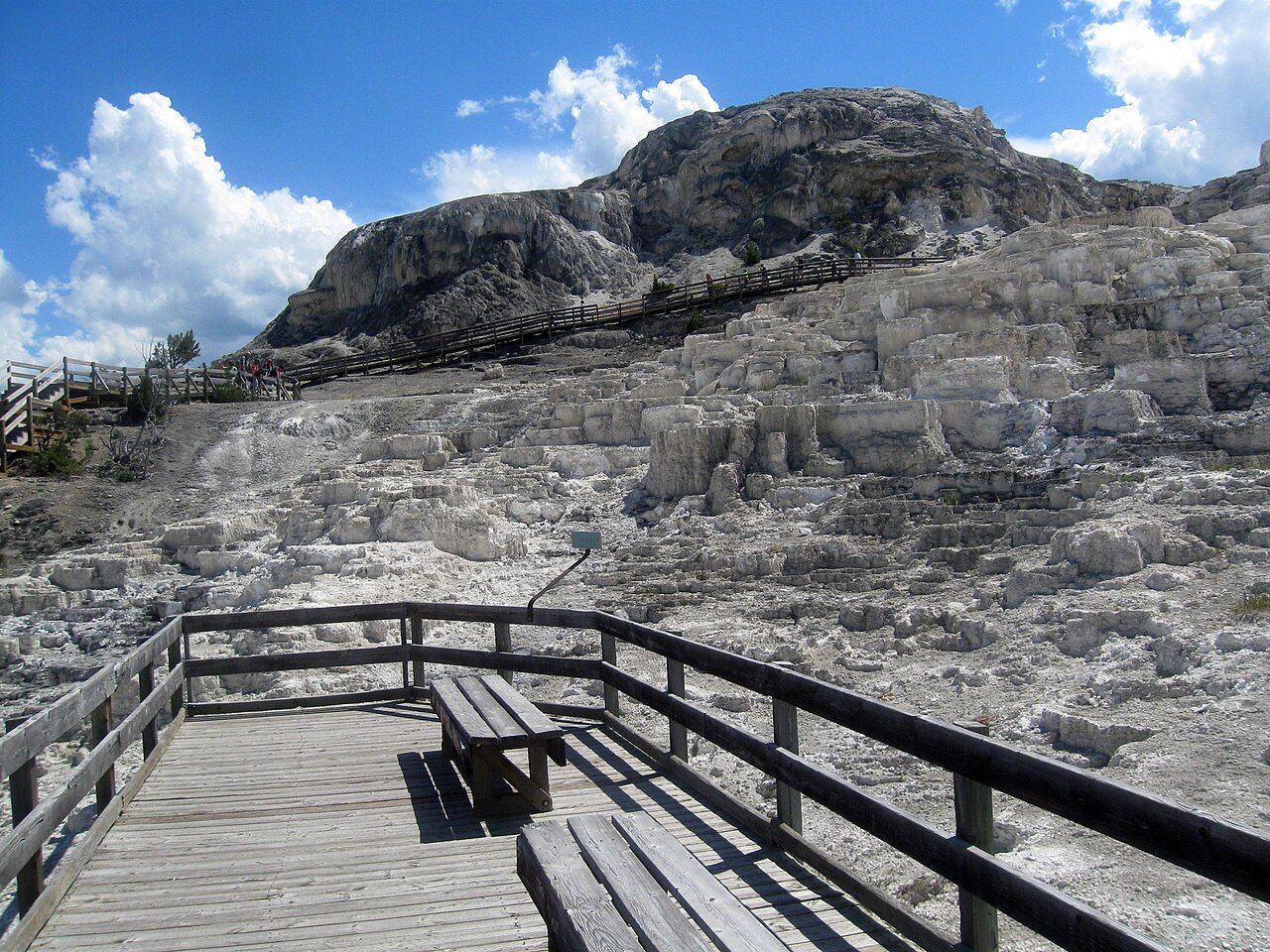
A network of boardwalks and stairs climbs the Lower Terraces from the edge of the village, and a short drive loops around the Upper Terraces. The lower boardwalks pass the famous formations, including Minerva Terrace and the springs that in recent years have been the most active, and lead uphill past viewing platforms to the upper area.
- Stay on the boardwalks and marked paths. The crust can be thin over scalding water, and the formations are fragile; a single footprint can scar them for years.
- Never touch the water or the deposits, and keep children and pets off the thermal ground. Pets are not allowed on the boardwalks.
- The stairs are steep in places and can ice up in winter. Traction aids help.
- The upper drive is closed to cars in winter.
For photography, the terraces reward both wide and close work. Wide frames show the stepped shape of the hill against the sky. Longer lenses pull out the patterns: ripples of rimstone, dripping edges and channels of coloured water. Overcast light often suits the white stone better than bright sun, which can blow out the highlights. In bright light, expose for the white and let the rest fall where it falls.
Elk in the village
Elk are a fixture at Mammoth through much of the year. They graze the lawns around the old buildings, rest under trees, cross the roads and sometimes lie in front of doorways. They look calm, and that is exactly why people forget that they are large wild animals.
Two seasons call for extra care. In late spring, cow elk with newborn calves can charge people who come too close, even when the calf is hidden and you have not seen it. In autumn, during the rut, bulls are restless and aggressive, bugling and herding cows around the lawns, and they will go after cars and people. Park rules ask you to stay at least 25 yards from elk, and that is a minimum, not a target. Use a telephoto, give animals the right of way, and put a vehicle or building between you and any elk that is moving towards you. Rangers sometimes close areas or direct people away from animals; follow their instructions.
Next frameBugles in autumn, herds on the snow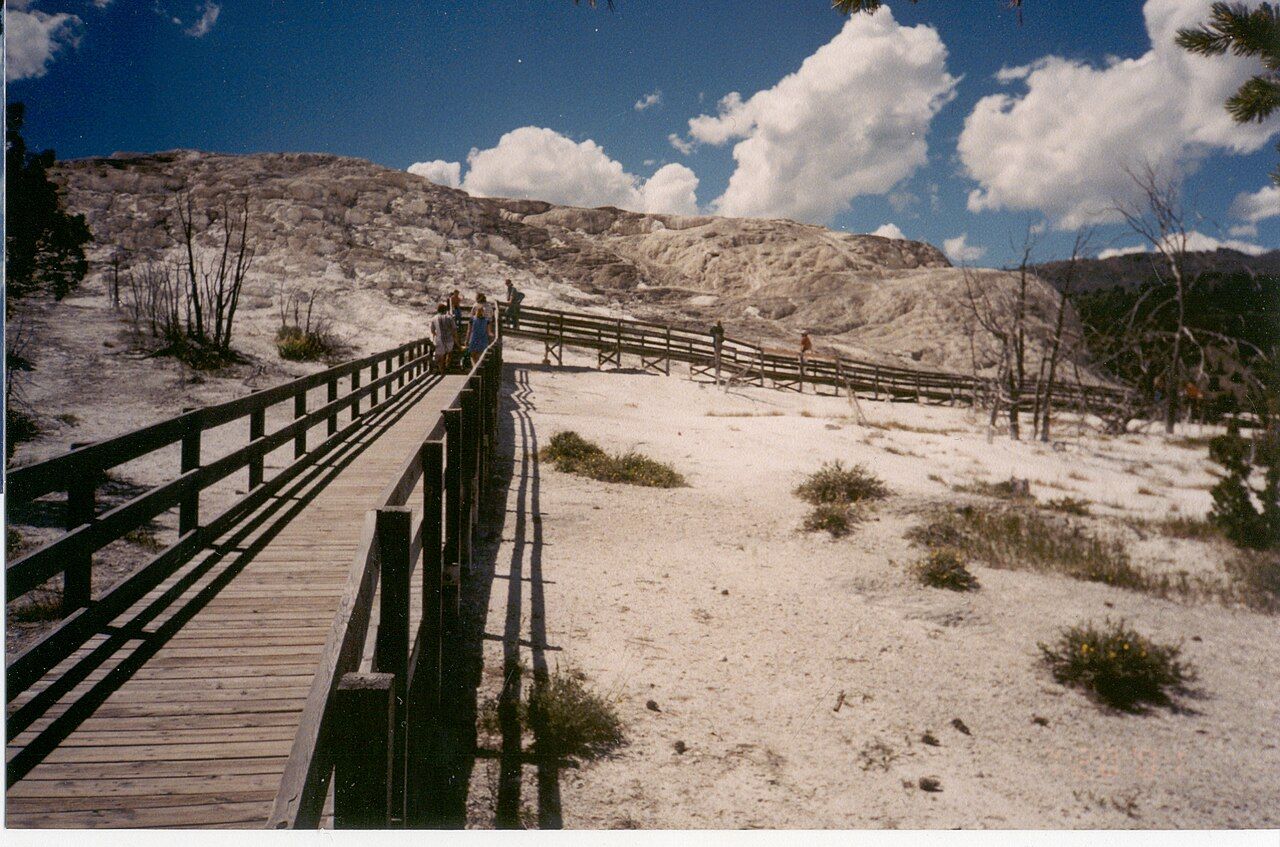
frame info
Chris Light · CC BY-SA 4.0Fort Yellowstone and the stone buildings
Before the National Park Service existed, the US Army managed Yellowstone, and Mammoth became its base. The soldiers left behind Fort Yellowstone, a set of buildings that still forms the core of the village: stone barracks and officers' quarters, a chapel and a range of service buildings. Today many of them house park offices and staff, so most are not open to wander through, but a self-guided walk around the old post is easy from the main parking area, and panels explain the history.
The buildings make useful foregrounds and context. A bull elk in front of a stone porch tells a different story from a bull on an empty meadow. Look for the lines of the old parade ground, the rooflines against the terraces and the steam drifting behind them on cold mornings. Remember that people live and work here; keep to public paths and do not photograph into homes.
Mammoth in winter
Most of Yellowstone's roads close to ordinary cars in winter, but the road from the North Entrance at Gardiner through Mammoth and east across the northern range is usually kept open to wheeled vehicles all year, weather permitting. That makes Mammoth one of the few places in the park you can reach by car in the cold months, and a natural base for winter trips into the Lamar Valley.
Winter is when the terraces are at their most atmospheric. On cold, still mornings, steam billows off the warm water and freezes onto nearby trees and grasses as rime. Elk often stay around the village through the season, and snow on their backs and the white of the terraces make soft, high-key images. Bring traction aids for icy boardwalks, keep batteries warm, and expect short days with low, raking light that flatters the textures in the stone.
Mammoth sits in the north-west corner of Yellowstone, close to the boundary with Montana, which puts it a long drive from Jackson Hole. Most visitors come either as part of a loop through the park or from the north. If you are coming from the south, plan for a full day of driving, allowing for wildlife stops and traffic in summer. Entry fees and road dates change, and you should check them before you go.
The terraces work at any hour, but early mornings bring fewer people and, in cool weather, more steam. Midday is good for the boardwalks if the sky is cloudy. Evenings bring elk out onto the lawns and warm light across the upper terraces. If you are heading on to other thermal areas, the colourful pools of Grand Prismatic Spring work in a very different way, as does the canyon described in the Grand Canyon of the Yellowstone.
Above all, give the elk room and stay on the boards. Mammoth is a place where wildlife, history and geology sit close enough to fit into one frame, and it stays that way only if visitors keep their distance.