Jackson Hole Wildlife Light

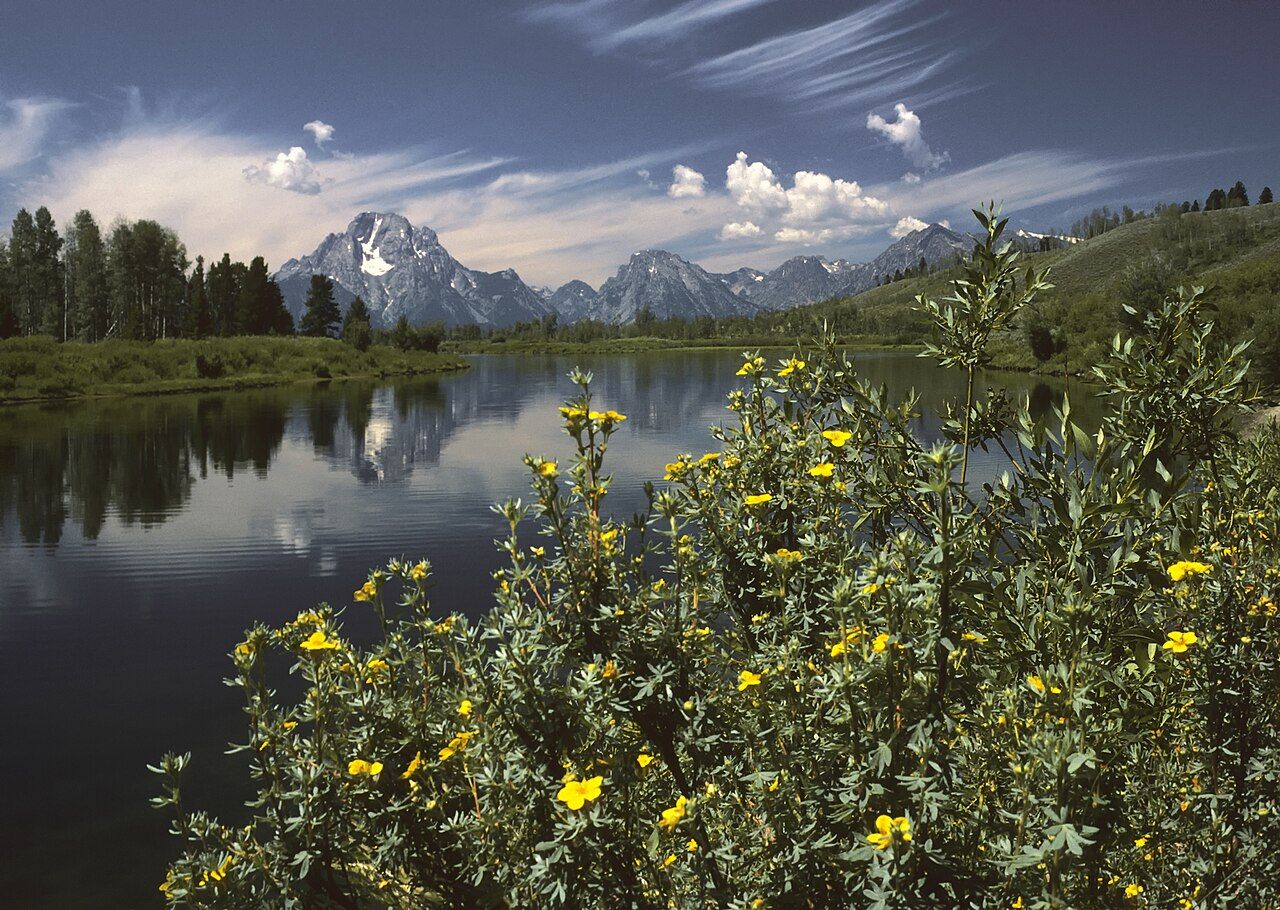
Oxbow Bend of the Snake River under Mount Moran
Oxbow Bend of the Snake River under Mount Moran.
frame infoMichael Gäbler · CC BY 3.0

The Teton Range rises straight out of the sagebrush with no foothills in the way, and Yellowstone begins an hour to the north. Between them live more large animals than almost anywhere in the lower 48. These pages are about seeing them well: where to stand, what time to be there, and how far back to stay.

The light meter

Grand Teton

Barns, beaver ponds and the river bend under the range.

  1. Mormon Row at first light
  2. Schwabacher Landing and its reflections
  3. Oxbow Bend and Mount Moran
  4. The Snake River Overlook
  5. Jenny Lake, Hidden Falls and Inspiration Point
  6. Signal Mountain and the park road

Yellowstone

Valleys of bison and wolves, geyser basins and a yellow canyon.

  1. Lamar Valley, America's Serengeti
  2. Hayden Valley and the bison rut
  3. Old Faithful and the Upper Geyser Basin
  4. Grand Prismatic Spring from above and below
  5. The yellow canyon and its falling river
  6. White stone, steam and elk on the lawns

Animals of the valley

Bison, elk, moose, bears and wolves, and how to keep your distance.

  1. Bison, up close but not too close
  2. Bugles in autumn, herds on the snow
  3. Moose in the willows
  4. Grizzlies, black bears and the space between
  5. Wolves on the northern range

Photographing it

Light, seasons, ethics and the town at the bottom of the Hole.

  1. Reading the light in the valley
  2. Photographs that leave no mark
  3. Jackson, the town at the bottom of the Hole

100 yards from bears and wolves.

25 yards from bison, elk, moose and everything else.

No drones in either park.

Why these rules matter