
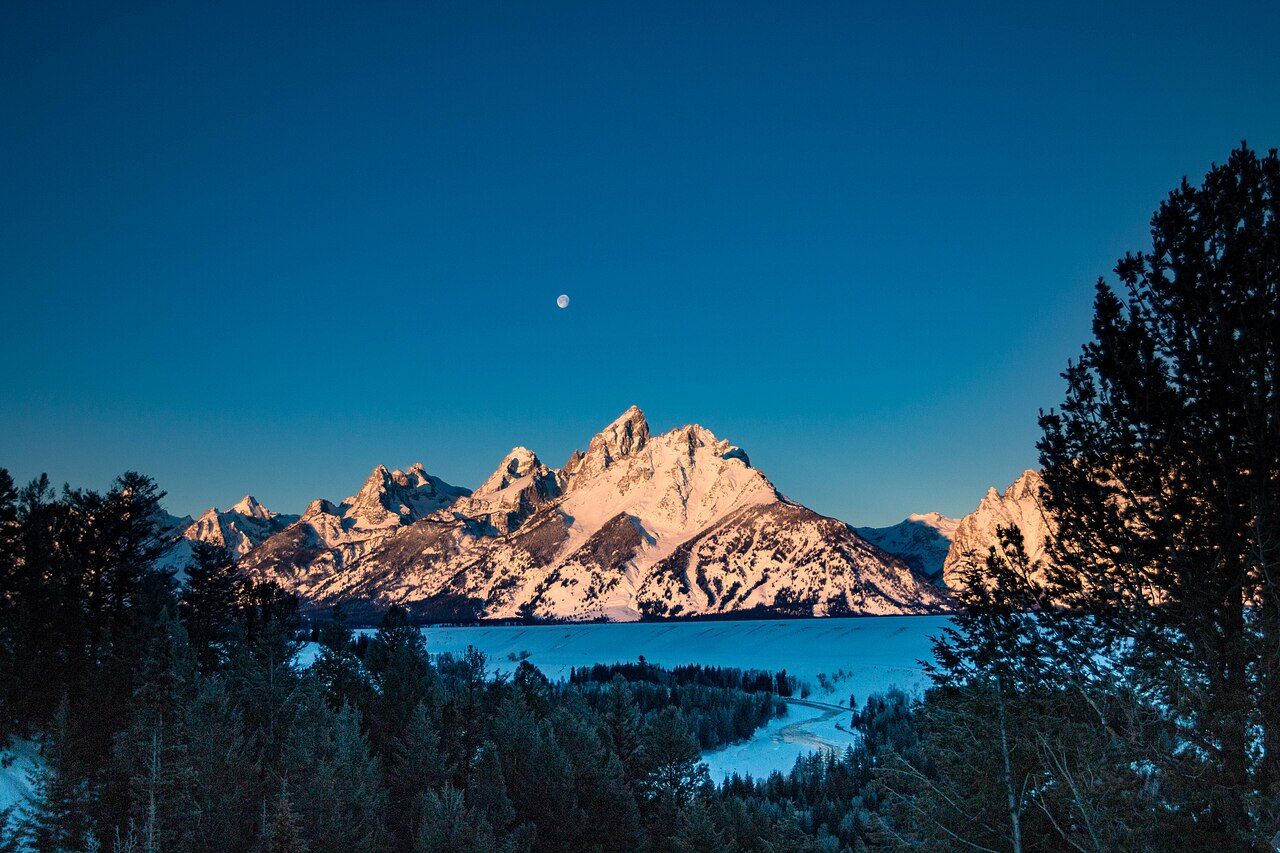

The Snake River Overlook is a paved pullout beside the main highway through Grand Teton National Park, north of Moose. From the edge of the bench, the land drops away to the river, which loops across the valley floor before disappearing into the trees. Beyond, the Teton Range rises in a single wall, with the Grand Teton near the centre. Many people know the view before they see it, because a black-and-white photograph made here in the early 1940s became one of the best-known landscape images in American history.
Then and now
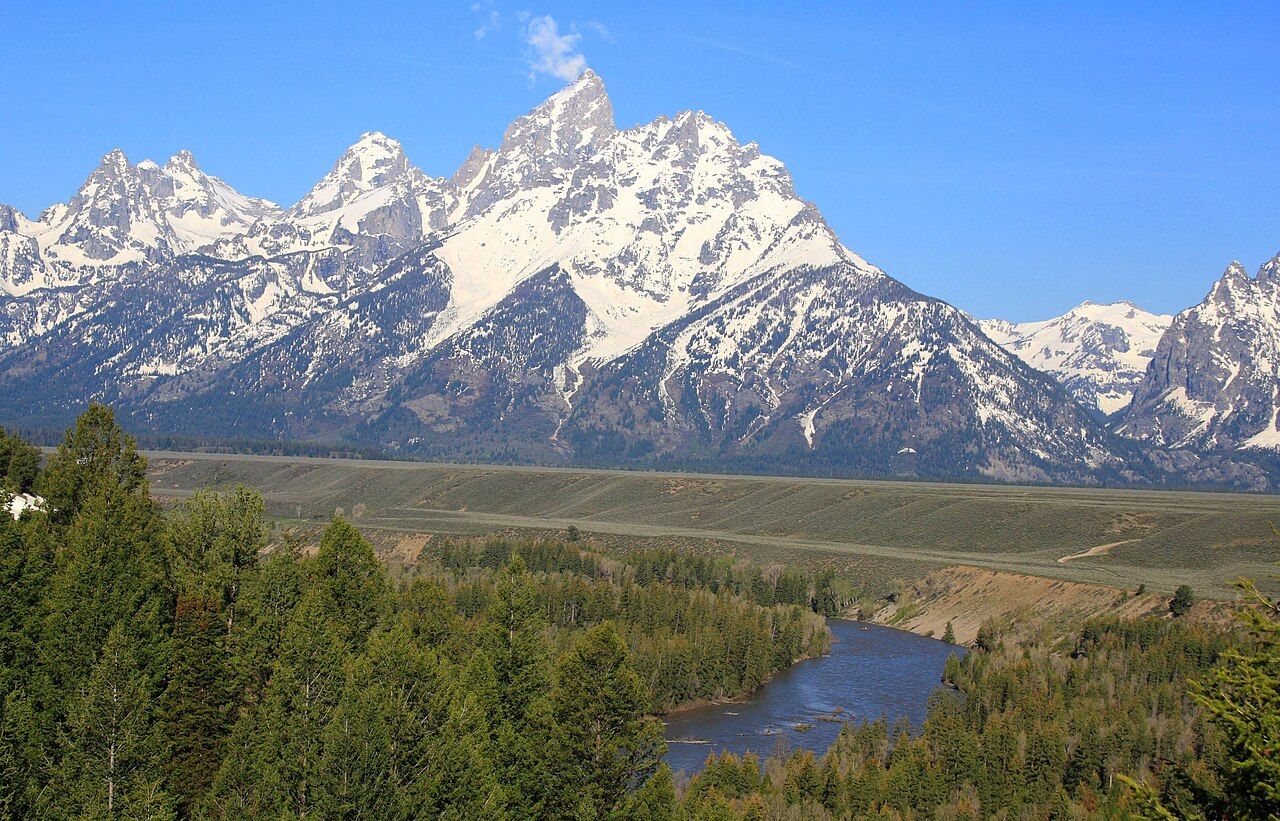
If you arrive expecting that old photograph, you may be surprised. The conifers on the slope below the overlook have grown a great deal since then, and they now hide much of the river's long curve. Where the old image shows a broad, shining bend sweeping across the frame, today you see a few glimpses of water between the treetops.
That does not make the view less worth seeing. It means the scene works differently. The range is unchanged, and the river still catches the light where it shows. Some photographers move along the edge of the pullout to find a gap in the trees; others give up on the curve and build the picture around the peaks.
Please do not cut or break branches to clear a view. The trees are part of the park, and their growth is a record of how the landscape has changed. The river itself has moved, too: banks erode, gravel bars come and go, and side channels open and close over the decades. The trees have grown, the river has shifted, and the range has stayed the same. Comparing your own frame with the old one is a quiet lesson in how fast a river landscape changes next to the mountains.
The trees have grown, the river has shifted, and the range has stayed the same.
What you are looking at
The flat ground you stand on is a terrace, one of several broad steps along this stretch of the valley. Over a long span of time, meltwater from retreating glaciers spread sand and gravel across the floor of Jackson Hole, and the Snake River then cut down through those deposits in stages, leaving benches at different heights. From the overlook you can often pick out lower terraces across the river, marked by changes in vegetation: sagebrush on the dry benches, conifers on the slopes and cottonwoods and willows down by the water.
The mountains rise abruptly because the range sits along an active fault. The valley side has dropped while the mountain block has tilted up, which is why there are no foothills to soften the view.
Light and season
The Tetons face east, so sunrise is the time to be here. In the first minutes of light, the highest peaks turn pink, then gold, and the glow moves down toward the valley floor. The river below stays in shadow for a while, which can give the scene depth.
- Summer: sunrise is early and the slopes are green. Afternoon thunderstorms can build over the range and make dramatic evening skies, even though the peaks are then backlit.
- Autumn: aspens and cottonwoods along the river turn yellow, and cold mornings often bring mist off the water.
- Winter: the highway is generally kept open, and snow simplifies the scene. On clear mornings the peaks glow against a deep blue sky, as in the picture at the top of this page.
- Spring: snow still lies on the peaks while the valley floor turns green, giving strong contrast.
Watch for the moon. On some mornings around the full moon, it sets over the range at dawn, and a longer lens can bring it close to the peaks. Moonset times shift through the year, so look them up in advance. Our page on light and seasons has more on the valley's changing conditions.
Where to stand
The pullout has a long frontage, and the view changes as you walk along it. Walk the full length before choosing a spot.
- From one end you may see more of the river through the trees.
- From the middle, the Grand Teton sits nearer the centre of the frame.
- From the other end, nearby trees make a natural frame on one side.
frame info
Frank Kovalchek · CC BY 2.0A wide lens takes in the whole range and some of the river, while a moderate telephoto lets you pick out the Grand Teton and the stretch of water below it. Because the peaks are bright and the slope below is dark at sunrise, bracket your exposures or use a graduated filter. A tripod helps in the dim light before the sun clears the eastern hills.
Wildlife and safety
The overlook is a roadside stop, and traffic moves fast. Park within the pullout, watch for cars when you step out, and keep tripods out of the road. Elk, pronghorn and sometimes bison cross the sagebrush flats nearby, and moose use the river bottom below. Park rules require you to stay at least 25 yards from most animals and at least 100 yards from bears and wolves. Drones are banned in national parks. Our guide to wildlife photography ethics covers these points in more detail.
Combining it with other stops
The overlook is a short drive from several other viewpoints, which makes it easy to fit into a morning loop. Start at Schwabacher Landing for reflections, move on to the overlook as the sun climbs, and continue north toward Oxbow Bend for wildlife and Mount Moran. Or reverse the order and catch sunrise on the barns at Mormon Row first.
Whatever your plan, check road conditions and park rules before you go. They change with the seasons, and sometimes with little warning.
End of the roll. Back to the light meter.