
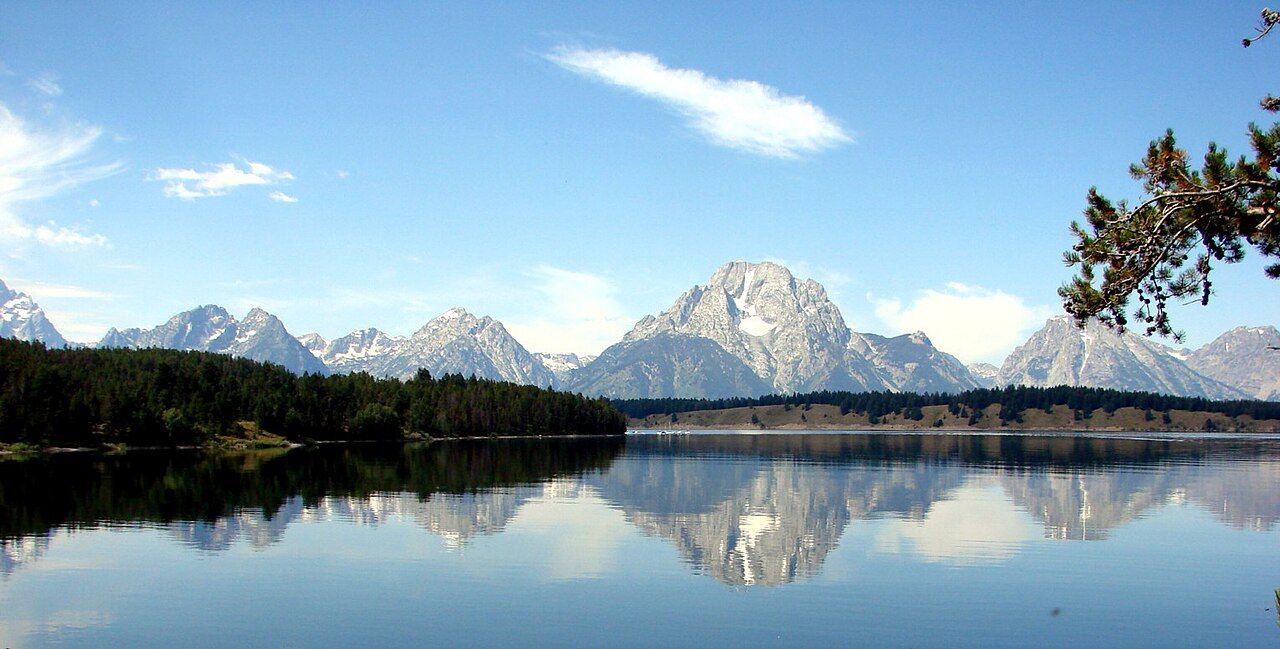
The Teton Park Road is the inner of the two main routes through Grand Teton National Park. Where the highway runs along the eastern side of the valley, the park road hugs the foot of the range, linking Moose in the south with Jackson Lake Junction in the north. Along the way it passes the turn to Jenny Lake, broad sagebrush flats, glacial potholes, and the shore of Jackson Lake. Near the north end, a narrow side road climbs to the summit of Signal Mountain, a lone forested hill that gives one of the best overviews of the valley.
The park road
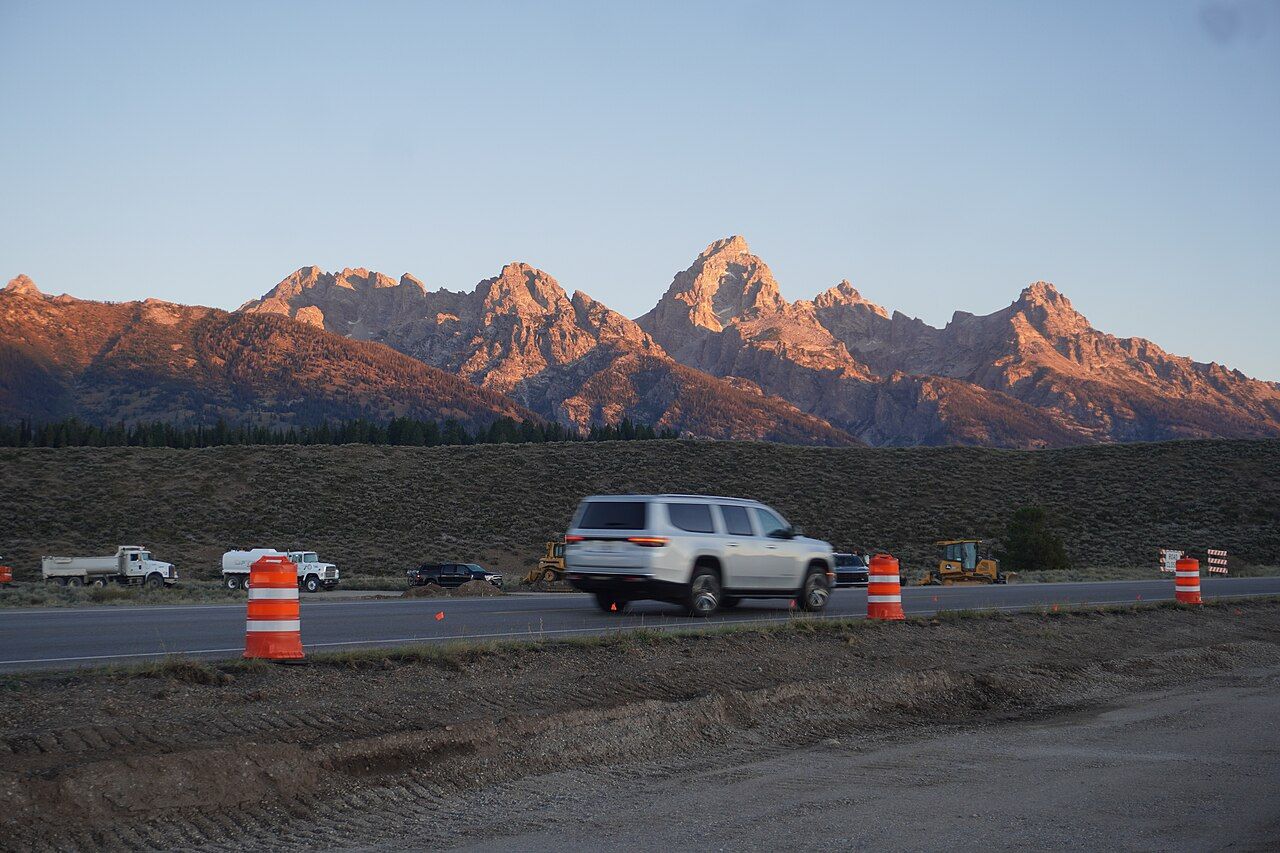
Driving north from Moose, the road crosses open flats with the peaks rising steeply to the west. There are many pullouts with interpretive signs and views of the range, and the lack of foothills makes the mountains feel very close. Morning is the best time to photograph the peaks from here, when the low sun lights their eastern faces.
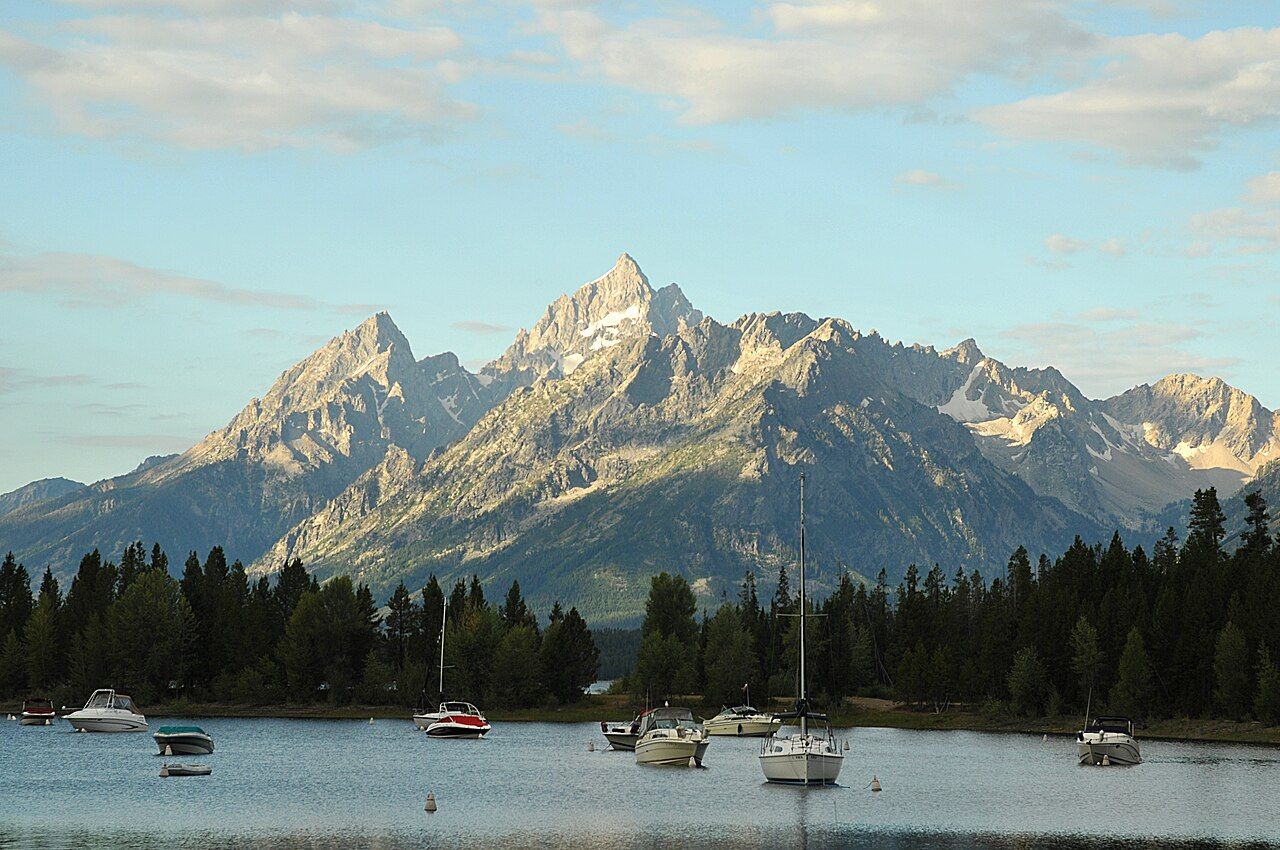
Further north, the road crosses a rolling stretch of glacial potholes, shallow hollows left where buried blocks of ice melted out as the glaciers retreated, and then swings toward a turnout that faces Mount Moran across the trees. Each stop shows the range from a slightly different angle, so a slow drive with frequent stops rewards you far more than a fast one. Evening along the lakeshore can also be striking, with the peaks dark against a bright western sky.
The road is also a good wildlife route. Pronghorn and bison graze the flats in summer, elk move between forest and meadow at dawn and dusk, and bears are sometimes seen in the forest edges. Keep your speed down, especially in low light, and use pullouts to stop. Never stop in the traffic lane.
frame info
GrandTetonNPS · Public domain
Road works are common in the short summer season, and you may meet delays, gravel sections or new layouts.
Winter closures
A long middle section of the Teton Park Road is closed to cars through the winter, usually from late autumn until spring. During the closure, the unplowed road becomes a quiet route for skiing, snowshoeing and walking. In spring, the road is often cleared and opened to walkers and cyclists for a while before cars return.
Next frameJenny Lake, Hidden Falls and Inspiration PointSignal Mountain summit road
The summit road leaves the park road near the south end of Jackson Lake and climbs through forest in a series of tight turns. It is narrow and winding, and trailers and large vehicles are not allowed. The road is closed in winter and usually opens in late spring, depending on snow.
Near the top, an overlook faces west across Jackson Lake to the northern Tetons, with Mount Moran rising above the water. From the summit area itself, the view turns east and south over the valley floor: the Snake River winding through cottonwoods, the sagebrush flats, and on clear days the hills on the far side of Jackson Hole. It is one of the few places where you can see the whole layout of the valley at once.
- In the evening, low sun lights the valley below while the peaks behind you go dark, a good time for the eastern view.
- For the western view over Jackson Lake, morning light on the peaks is better.
- A long lens helps to pick out the river bends and the patterns of sagebrush and forest.
- The hill takes its name, as the story goes, from a signal fire lit during a search for a lost traveller in the late 1800s.
Jackson Lake
Jackson Lake is the largest lake in the park. It is a natural lake, but a dam at its outlet raised its level in the early twentieth century, and today its water is managed for irrigation downstream. In late summer and autumn the level can fall well below the high-water line, exposing mud and stumps along the shore.
frame info
EnLorax G. Edward Johnson · CC BY 3.0On calm mornings, the lake reflects Mount Moran and the northern peaks, as in the picture at the top of this page. Small bays and coves along the shore are often calmer than open water. Wind usually rises in the afternoon, so plan reflection shots for early in the day. The Oxbow Bend viewpoint, just east of the lake's outlet, offers a similar mirror on the slow Snake River.
Wildlife in the pullouts
Many of the park's wildlife sightings happen from the road, and that brings responsibility. When animals are close, traffic can stop quickly and people often leave their cars to get closer. Do not. Stay in your vehicle or near it, park fully off the road and keep moving if there is no space.
Park rules require you to stay at least 100 yards from bears and wolves and at least 25 yards from other animals. Never feed wildlife, and never use calls or bait to draw them in. Drones are banned throughout the park. Our pages on bears and wildlife photography ethics cover these rules in more depth.
A full drive along the park road, with a side trip up Signal Mountain and stops at the lakes, fills most of a day. Combine it with an early sunrise at Schwabacher Landing and an evening at the summit for a long, varied day in the park.